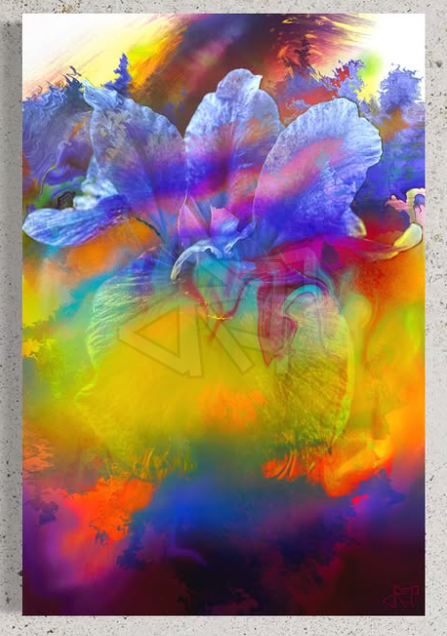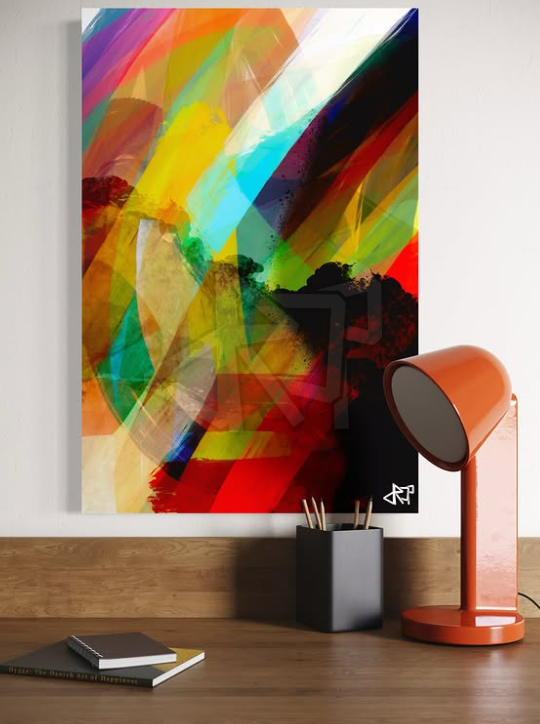


There is a difference between a home with artwork and a home with an art collection.
It is not necessarily the number of pieces.
It is not the price.
It is not whether every artist is well known.
And it definitely is not whether every painting matches the furniture.
A collection begins to feel real when the individual pieces reflect choices made over time.
Something caught your attention.
Something challenged you.
Something reminded you of a place or experience.
One piece came home because you could not stop thinking about it. Another entered your life years later for a completely different reason.
Eventually, those individual decisions begin telling a larger story.
For homeowners interested in original artwork in Westhampton NY, I believe this is one of the most rewarding ways to approach collecting.
Do not try to decorate every wall at once.
Build something slowly.
Let your taste develop.
Allow different artworks to have different personalities.
A home does not need to look like someone selected every piece during one afternoon.
In fact, I think the opposite can be much more interesting.
A Collection Should Reflect You Before It Reflects the Room
Interior design matters.
Scale matters.
Architecture matters.
Placement matters.
But those considerations should not completely determine what you collect.
If every artwork is chosen primarily because it matches the room, the collection can begin feeling like an extension of the furniture.
The blue painting belongs with the blue chairs.
The neutral print belongs above the beige console.
The abstract piece repeats the colors in the rug.
Everything works.
But what happens when the furniture changes?
A meaningful collection needs another foundation.
Personal taste.
Curiosity.
Memory.
Emotion.
Connection.
The Art Institute of Chicago has documented private collections whose development was guided strongly by individual taste rather than simply by reputation or convention. Its account of the Worcester Collection, for example, emphasizes the collectors’ personal and individual taste as a central force behind what they chose.
That idea matters in a home too.
Your collection should eventually reveal something about the way you see.
Collected and Decorated Are Not the Same Thing
A decorated room is usually trying to reach a finished state.
A collection does not have to.
That difference changes everything.
When you decorate, there can be pressure to solve the entire room.
You need something above the sofa.
Something beside the fireplace.
Something in the hallway.
Something over the console.
The walls become problems that need solutions.
Collecting works differently.
You find artwork because you respond to it.
Then you decide where it belongs.
Sometimes you may even own a piece before knowing exactly where it will live.
That is okay.
The collection is allowed to develop gradually.
Do Not Start by Asking What You Need
Try asking what you actually respond to.
Maybe you keep noticing heavily textured abstract paintings.
Perhaps you are drawn toward restrained color.
Maybe you love artwork with aggressive movement.
Perhaps smaller intimate pieces affect you more than enormous canvases.
You might like work that feels unresolved.
Or art that becomes quieter the longer you look.
Pay attention to those reactions.
You are beginning to understand your taste.
That understanding is more useful than starting with a shopping list of empty walls.
Your Taste Does Not Need a Name
You do not need to become an art historian before collecting original artwork.
You also do not need to identify one style and remain inside it forever.
Maybe you cannot explain why you love a particular painting.
That does not make the response less legitimate.
Sometimes your first reaction is simply:
I want to keep looking at this.
That matters.
The National Gallery of Art’s story of collectors Herb and Dorothy Vogel provides an interesting example. They built a collection of thousands of works while living on ordinary salaries, often pursuing artists and ideas they found compelling rather than chasing established market appeal. Their collecting grew through sustained looking, curiosity, and relationships with artists.
A personal collection can begin from the same simple place.
Attention.
Spend More Time Looking Before You Buy More
One of the best things you can do when building a collection is look at a lot of art.
Not because you need to copy what museums or other collectors have done.
Because looking helps you understand your own reactions.
Notice what makes you stop.
Then notice what does not.
Look at abstraction.
Painting.
Printmaking.
Photography.
Sculpture.
Works on paper.
Different periods.
Different materials.
You may discover that the work you thought you wanted is not actually the work you keep returning to.
That discovery is useful.
Let Yourself Change Your Mind
Taste evolves.
That should be expected.
The first artwork you buy does not need to determine the next twenty.
Maybe your earliest pieces are restrained.
Years later, you become interested in stronger movement.
Perhaps you begin with limited edition prints and eventually commission a large original painting.
Maybe you discover that texture matters much more to you than color.
A collection becomes interesting when it records that evolution.
It does not need to hide it.
Your Collection Does Not Need One Visual Style
This is one of the easiest ways to make a collection feel overly decorated.
Every piece has the same palette.
Every frame is identical.
Every artwork has similar dimensions.
Everything belongs to the same visual family.
There can be beauty in consistency, but too much can make a home feel like a coordinated product collection.
Real collecting allows contrast.
A large abstract painting can live in the same home as a quiet print.
A heavily textured original can exist near something visually minimal.
A restrained piece can sit across the room from something energetic.
The connection does not always have to be visible.
Sometimes the connection is simply you.
You Are the Common Thread
This is worth remembering.
Your collection does not need a matching color palette because the collector already provides continuity.
You selected the pieces.
They entered your life for different reasons, but they passed through the same filter.
Your attention.
Your curiosity.
Your emotional response.
Your experiences.
That can be enough to hold very different artwork together.
Do Not Buy Art Only to Complete a Room
An empty wall can create unnecessary urgency.
The room is almost finished.
Everything is installed.
Now there is one blank area that feels unresolved.
That is exactly when people can make a rushed art decision.
Something fits.
The colors work.
The dimensions are right.
So they buy it.
Six months later, they barely notice it.
I would rather leave the wall empty.
Wait until you find something worth living with.
Empty space is temporary.
Artwork you do not care about can stay much longer.
One Strong Piece Can Be the Beginning
You do not need five artworks to begin a collection.
You need one.
One piece that makes you understand why original art matters to you.
Maybe it becomes the visual center of the living room.
Perhaps it is much smaller and lives somewhere private.
Its size does not determine its importance.
The relationship does.
Once you live with something meaningful, you begin understanding what you want from the next piece.
Do Not Expect Every Artwork to Have the Same Job
Some artwork anchors a room.
Some creates curiosity.
Some holds personal meaning.
Some changes dramatically with light.
Some becomes almost meditative.
Some is energetic.
Some challenges you.
Some pieces are visually dominant.
Others reveal themselves slowly.
A collection becomes richer when every artwork is not trying to accomplish the same thing.
Build Around Experiences, Not Categories
You do not necessarily need to say:
Now I need a painting.
Next I need a print.
Then I need a sculpture.
Collecting does not have to follow a checklist.
Instead, think about experiences.
Maybe one room needs something you can experience from across the space.
Another needs a piece that rewards close viewing.
A hallway might create an opportunity for something intimate.
A dining room may support more visual energy.
Different works can create different experiences throughout the home.
Original Artwork and Limited Edition Prints Can Live Together
A personal collection does not need to consist entirely of large original paintings.
Limited edition prints can play an important role.
The National Gallery of Art’s print holdings themselves grew from gifts by numerous private collectors and today span tens of thousands of works, demonstrating how works on paper can form an important part of a broader art collection.
For a home collector, prints can create another way into an artist’s work.
You might begin with a limited edition print because you genuinely connect with the image.
Later, you might add an original.
Or the print may remain one of your favorite pieces.
Medium does not determine emotional importance.
Small Artwork Can Be Just as Important as Large Artwork
Large walls naturally receive attention.
But some of the most personal moments in a collection can happen at smaller scale.
A piece beside a reading chair.
Artwork in a hallway.
A small original near a desk.
Something positioned where you see it every morning.
These works may not dominate the architecture.
They become part of daily life instead.
A collection needs both kinds of moments.
Give Important Artwork Room to Breathe
Collecting more art does not mean displaying everything simultaneously.
This becomes increasingly important as the collection grows.
If every wall is filled simply because you own enough artwork to fill it, individual pieces can lose their presence.
Space allows attention.
The National Gallery has even created exhibitions where reducing visual and interpretive distractions was used to encourage close looking at individual works.
A home can benefit from the same principle.
You do not need to reproduce a museum.
But you can give artwork enough room to be experienced.
Rotate Artwork When It Makes Sense
Your collection does not have to remain frozen.
A piece can move.
Artwork from a bedroom can enter the living room.
A print can be stored safely for a period and later return.
A smaller work can become part of a different grouping.
Changing placement can completely alter how you experience something familiar.
It can also prevent the home from becoming visually overcrowded as your collection expands.
For works on paper, appropriate display conditions matter especially because light exposure can damage sensitive materials over time. The National Gallery notes that such works are displayed for limited periods for precisely this conservation reason.
Placement Can Change Your Relationship With a Piece
Artwork behaves differently depending on its environment.
Natural light changes it.
Viewing distance changes it.
Furniture changes it.
The surrounding wall changes it.
Even moving a piece from a busy room into a quieter space can make you notice something completely different.
That is why placement should not always be considered permanent.
Let your collection move with your home.
Avoid Making Every Frame Identical
Framing can create visual connection, but perfect uniformity is not always necessary.
The frame should first serve the artwork.
Some pieces need very little visual interruption.
Others benefit from a stronger boundary.
Works on paper may require particular protective considerations.
A collection assembled over time will naturally contain different materials, dimensions, and presentation needs.
Allowing those differences to remain visible can reinforce the feeling that the collection grew organically.
Collect Slowly Enough to Notice Patterns
After you own several pieces, something interesting begins happening.
Patterns appear.
Maybe you keep choosing similar movement without realizing it.
Perhaps certain colors repeatedly attract you.
Maybe nearly everything contains texture.
You might discover that you consistently respond to work with strong negative space.
Those patterns reveal your taste.
You did not need to define it beforehand.
The collection defined it for you.
Do Not Force Yourself to Become Consistent
Once you notice those patterns, do not turn them into rules.
You are allowed to surprise yourself.
Maybe you have collected quiet abstract art for years and suddenly encounter a piece that feels completely different.
If you genuinely connect with it, that difference can strengthen the collection.
A collection that never takes any risks can become predictable.
Buy the Piece You Keep Thinking About
Sometimes artwork stays with you after you leave.
That reaction deserves attention.
You continue remembering one section of the composition.
A texture.
A color.
A feeling.
You imagine where it could live.
You return to look again.
That is very different from thinking:
This would match the living room.
One response comes from connection.
The other comes primarily from decoration.
When building a collection, I would pay much more attention to the first.
Do Not Let Trends Build Your Collection
Interior trends move quickly.
A particular color becomes popular.
Then a particular kind of minimalism.
Then bold color returns.
Then everything changes again.
Artwork can live through all of it.
The Art Institute of Chicago’s history of collector Bertha Palmer is a useful reminder that significant personal collecting can involve pursuing one’s own taste even when that taste differs from prevailing opinion. Her early enthusiasm for Impressionism came when the movement could still be regarded as radical or controversial.
You do not need to predict what other people will eventually value.
You need to understand what you want to live with.
Collecting Is Not the Same as Investing
Artwork can have financial value.
But if you are building a collection primarily for your home, I would not let potential appreciation become the only reason you choose a piece.
You are going to live with the artwork.
You will see it much more often than you see a valuation.
That everyday relationship matters.
Even the story of Herb and Dorothy Vogel ultimately became about something much larger than financial return. Their collection grew from sustained engagement with art and artists, and they eventually chose to place major portions of it into public museum collections rather than treat the works simply as commodities.
Collect because the work matters to you first.
Learn About the Artist and the Process
When possible, understand where the artwork came from.
What materials were used?
How does the artist work?
What ideas influence the practice?
What role does texture play?
Is the piece part of a larger body of work?
Understanding process can deepen your relationship with an artwork.
You begin seeing decisions you might otherwise have missed.
The piece stops being only an image.
It becomes evidence of someone’s thinking and making.
Relationships With Artists Can Change the Experience of Collecting
One of the most interesting aspects of the Vogel collection was the close relationships the collectors developed with many of the artists whose work they acquired. They were interested not only in finished objects but also in artists’ ideas and processes.
That kind of connection can make collecting feel much more human.
When you understand something about how a piece came into existence, your relationship with it changes.
This is especially true with commissioned artwork.
You were not simply present at the end.
You became part of the beginning.
Custom Artwork Can Give a Collection a Different Kind of Meaning
At some point, you may want something that does not already exist.
Perhaps there is an important wall with unusual proportions.
Maybe your collection lacks a piece that carries a particular emotional quality.
Or perhaps you want artwork connected to a personal experience.
That is where a custom commission can become particularly meaningful.
You are not searching through existing pieces hoping one happens to fit.
We begin with you.
A Commission Should Not Become a Decorating Exercise
Even when artwork is being created specifically for a home, I do not believe the goal should be perfect coordination.
The room matters.
Absolutely.
I want to understand the architecture.
Natural light.
Scale.
Materials.
Sightlines.
Furniture.
But those things provide context.
They should not reduce the artwork to a list of matching colors.
A commission should still have an identity of its own.
Custom Artwork Is a Collaboration
When I create custom artwork, I see the process as something we create together.
You bring your home.
Your experiences.
Your memories.
Your preferences.
Your perspective.
Your existing collection.
The things you already know you respond to.
I bring interpretation.
Composition.
Texture.
Movement.
Color.
Materials.
And my creative instincts.
The final piece develops between those perspectives.
You do not need to design the painting.
And I do not want to create something disconnected from you.
We meet somewhere between the two.
Your Existing Collection Can Give Me Useful Information
If you already own artwork, I want to see it.
Not because the new commission needs to match.
The opposite may be true.
Your existing pieces help me understand your eye.
Maybe there is a particular kind of movement you consistently respond to.
Perhaps texture matters more than you realized.
Maybe your collection is very restrained and the next piece needs to introduce something unexpected.
Looking at what you already love can tell us much more than looking only at upholstery samples.
A Custom Piece Can Create Contrast Within the Collection
Sometimes the missing piece should not resemble anything you already own.
Perhaps the collection needs scale.
Maybe it needs more physical texture.
Maybe everything is visually quiet and one room can support stronger movement.
A commission gives us the opportunity to explore that gap intentionally.
The goal is not to complete the collection forever.
Collections are never really finished.
The goal is to add another meaningful chapter.
Let Personal Experiences Enter the Collection
Not every piece needs a story.
But some can.
A place may matter to you.
A memory.
A period in your life.
A relationship.
A photograph.
An experience that is difficult to explain.
Those things can inspire custom abstract artwork without becoming literal imagery.
The connection can remain private.
Everyone else sees the painting.
You know what sits underneath it.
That personal layer can make the collection uniquely yours.
Westhampton Can Influence the Collection Without Becoming a Theme
Your surroundings naturally influence the way you experience art.
Light.
Landscape.
Architecture.
Seasonal changes.
The relationship between interior and exterior spaces.
Those qualities can affect placement and even the type of artwork you respond to.
But a collection in Westhampton does not need to become a collection about Westhampton.
You do not need coastal imagery everywhere.
You do not need one predetermined palette.
Let the environment provide context without turning it into a theme.
A Home Is Different From a Gallery
Museums and galleries have particular purposes.
Your home has another.
You live there.
People gather there.
You eat dinner beside the artwork.
You pass it when you are tired.
You see it early in the morning.
Children may grow up around it.
Guests may ask about it.
That everyday relationship changes what collecting means.
You are not creating an exhibition for anonymous visitors.
You are creating an environment you will inhabit.
Let Artwork Become Part of Everyday Life
Some of the strongest pieces in a collection eventually become so familiar that you stop consciously analyzing them.
Then something changes.
Afternoon light reaches the surface differently.
You notice a mark you had forgotten.
Someone asks about the piece.
You remember when you acquired it.
Suddenly you see it again.
That cycle is part of living with original artwork.
Familiarity does not necessarily make the piece less interesting.
Sometimes it makes the connection deeper.
Collections Accumulate Memories
When you first acquire artwork, you may remember the purchase.
Years later, the piece contains much more.
You remember the home where it first hung.
The people who gathered around it.
A particular period of your life.
Maybe it moved with you.
Maybe it changed rooms several times.
Eventually, the story of the artwork becomes mixed with your own story.
That cannot be manufactured instantly.
It requires time.
Which is another reason I believe the strongest collections should be allowed to develop slowly.
Your Collection Should Be Able to Survive a Redesign
Imagine replacing every major piece of furniture in the room.
Would you still want the artwork?
If yes, you are probably building something deeper than decoration.
Strong artwork can survive new furniture.
New wall colors.
Different rugs.
Renovations.
Even another home.
The room can evolve around the collection.
That is one of the clearest signs that the artwork has an identity beyond interior styling.
You Should Want to Take the Collection With You
This is one of my favorite tests.
Imagine moving.
Which pieces immediately come with you?
Not because they are expensive.
Because the idea of leaving them behind feels wrong.
Those are the pieces that reveal the emotional center of your collection.
You may not have purchased them for the same reasons.
They may not look anything alike.
But they matter.
That is what makes them belong together.
Do Not Worry About Finishing
A collection does not need a final piece.
There is no moment when you need to declare it complete.
You can stop collecting for several years.
Then discover something unexpectedly.
You can commission one major artwork and live with it before deciding what comes next.
You can move pieces between rooms.
You can change your mind.
The collection stays alive because your relationship with art stays alive.
Questions to Ask Before Adding Another Piece
Before buying or commissioning another artwork, ask yourself what is actually driving the decision.
Do I keep thinking about this piece after seeing it?
Would I want it if I had no immediate wall for it?
Does it add something different to what I already own?
Am I buying it because I love it or because the room feels unfinished?
Does the artist’s process interest me?
Will I still care about this artwork after the current interior changes?
Is there enough room for the piece to breathe?
Could something already in my collection move instead?
Does this artwork reflect my taste or someone else’s idea of what belongs in my home?
And perhaps most importantly:
Would I take this piece with me if I moved tomorrow?
That question can reveal a lot.
My Custom Commission Process
My commission process begins with consultation.
If you already collect art, we can talk about what you own and why certain pieces matter to you.
We also discuss your home.
Architecture.
Natural light.
Scale.
Materials.
The intended wall.
Sightlines.
And the way you use the space.
Then we move deeper.
Your experiences.
Preferences.
Memories.
Emotional direction.
Anything you want the new piece to carry.
From there comes creation.
I translate those conversations through composition, movement, texture, color, materials, and intuition.
There is direction, but there also needs to be creative freedom.
Once the piece is complete, it is carefully prepared and delivered so it can begin its life alongside the artwork you already own.
Consultation.
Creation.
Delivery.
The process is simple.
The relationship that develops around the artwork can continue for years.
How to Build an Art Collection That Feels Collected, Not Decorated
Give it time.
That may be the simplest answer.
Do not buy artwork just because a wall is empty.
Do not require every piece to match.
Allow different sizes.
Different materials.
Different moods.
Different periods of your own taste.
Learn what you respond to.
Spend time looking.
Build relationships with artists when possible.
Choose original artwork because it gives you something you want to keep experiencing.
Mix originals with limited edition prints when they genuinely belong in your collection.
Commission something personal when you want a piece that does not already exist.
Move artwork when your home changes.
Leave some walls empty.
And let your collection remain unfinished.
Because the goal is not to make your home look as though everything was selected perfectly at the same moment.
The goal is for someone to look around years from now and understand that these pieces arrived for different reasons, at different times, and somehow became part of the same life.
Discover Original Artwork in Westhampton NY With Gendrop Art
If you are looking for original artwork in Westhampton NY, I believe collecting should begin with connection rather than coordination.
Find work you want to keep looking at.
Give yourself permission to develop your taste.
Allow your collection to contain contrast.
And when you want something created specifically for you, the commission can become another part of that evolving story.
My custom commissions are collaborative.
You bring your home, existing collection, memories, experiences, preferences, ideas, and perspective.
I bring interpretation, composition, texture, movement, materials, color, and my creative process.
Together, we create something that does not simply decorate the room.
It becomes part of your collection because it means something there.
I also create original and custom artwork for homeowners and collectors throughout East Hampton, Bridgehampton, Huntington, Oyster Bay Cove, Brookville, Roslyn, Manhasset, Sands Point, Syosset, and Cold Spring Harbor.
Explore original artwork, custom commissions, and limited edition prints at Gendrop Art.