
A dining room is rarely just a place where people eat.
It is where conversations stretch longer than expected.
Where family gathers.
Where friends sit together.
Where holidays happen.
Where ordinary dinners become memories without anyone realizing it at the time.
That makes choosing artwork for a dining room different from simply filling an empty wall.
For homeowners considering custom art for dining rooms in Sands Point NY, I believe the more interesting question is not:
What artwork matches the dining room?
It is:
How do you want the room to feel when people are sitting inside it?
Artwork can change that feeling.
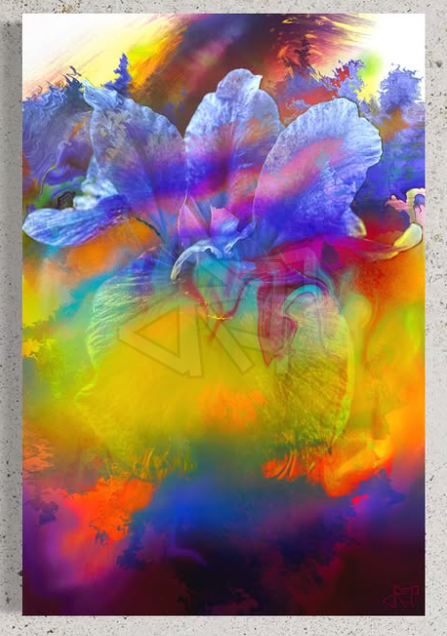
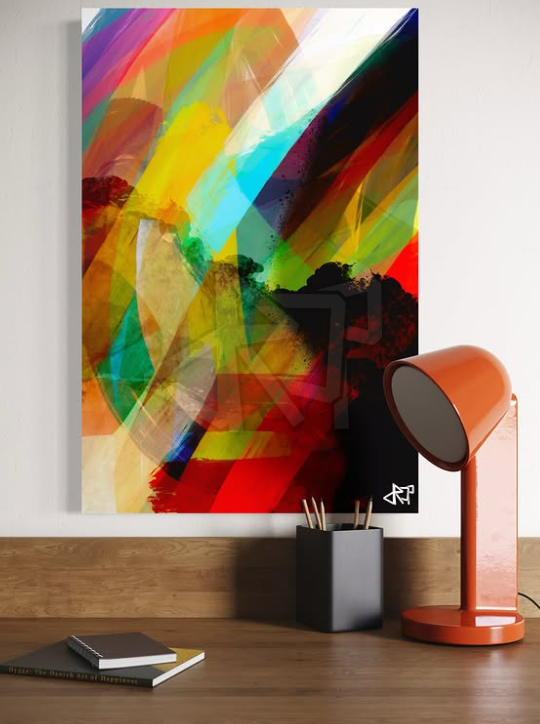
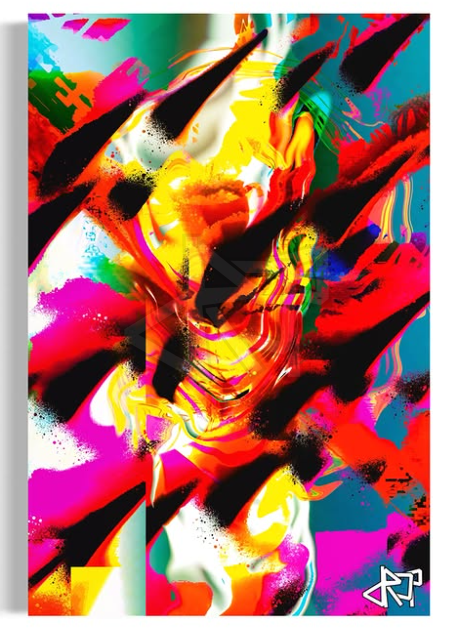
A large abstract painting can make a formal dining room feel more relaxed. A quiet composition can bring calm to a room containing dramatic architecture. Texture can create warmth in an interior dominated by smooth surfaces. Strong movement can give energy to a space designed around conversation and gathering.
The artwork does not need to describe dining.
It needs to participate in the experience of the room.
Start With Atmosphere Instead of Color
When people begin looking for dining room artwork, color often becomes the first consideration.
What color is the table?
What color are the chairs?
What does the rug look like?
What finishes are used in the lighting?
Those details matter.
But I would not begin there.
I would begin with atmosphere.
Should the room feel intimate?
Energetic?
Warm?
Quiet?
Unexpected?
Refined without becoming overly formal?
Do you want people to enter and immediately notice the artwork, or should the piece reveal itself gradually as they spend time around the table?
Those questions can lead somewhere much more personal than matching the painting to upholstery.
Artwork Can Change the Emotional Temperature of a Dining Room
Every room already has a certain emotional character before artwork enters it.
Some dining rooms feel very formal.
Others feel relaxed.
Some are architecturally minimal.
Others contain strong materials, dramatic lighting, substantial furniture, or detailed millwork.
Artwork can reinforce that existing atmosphere.
Or it can change it.
That second possibility interests me.
If everything in the dining room feels precise, the artwork can introduce irregularity.
If the architecture feels serious, the painting can introduce movement.
If the room already contains enormous visual energy, the artwork might become quieter.
Contrast can create balance.
The Dining Room Is Experienced Differently From a Living Room
A living room is often experienced while moving through the home.
You enter.
Sit.
Stand.
Walk between spaces.
The dining room creates a different relationship with artwork.
People remain in relatively fixed positions for longer periods.
They sit across from one another.
Conversations continue.
The artwork remains in the background and then periodically comes back into attention.
That means dining room art does not necessarily need to reveal everything immediately.
It can reward time.
Texture can become more noticeable as the evening continues.
Subtle areas of color can emerge under different lighting.
Small details can become visible after someone has been sitting across from the piece for an hour.
That slow relationship can be powerful.
Think About What Guests Actually See From the Table
Before choosing artwork, sit in every dining chair.
Seriously.
Look around.
What does each person see?
One person may face the artwork directly.
Another may see it from an angle.
Someone else may experience it beside a window.
The homeowner sitting at one end of the table may see the painting from a completely different perspective than someone sitting opposite.
These sightlines matter.
A custom commission gives us the ability to think about how the artwork works from several positions instead of only how it looks when standing directly in front of the wall.
The Artwork Can Become Part of the Conversation Without Demanding It
There is a balance I like in dining rooms.
The artwork should have enough presence that people notice it.
But it should not feel as though it is constantly interrupting the room.
It can become something guests ask about.
Something they notice halfway through dinner.
Something that changes depending on where they are sitting.
But the artwork should still allow the room to function socially.
A dining room is about people.
The painting should contribute to that environment rather than overpower it.
Large Artwork Can Make a Dining Room Feel Simpler
A substantial dining room wall often tempts people toward multiple pieces.
A gallery arrangement.
Several framed works.
A collection of decorative objects.
That can work.
But one large original painting can sometimes make the room feel calmer.
There is one composition.
One visual rhythm.
One focal point.
The eye does not need to jump between several frames, colors, and images.
Scale creates presence without requiring visual clutter.
This is especially useful when the dining table, chairs, chandelier, windows, and architectural materials already contribute significant visual information.
Large Does Not Have to Mean Loud
A large painting does not automatically need intense color.
Scale itself creates impact.
That gives us freedom to make other decisions more carefully.
A substantial artwork can contain restrained tones.
Open areas.
Quiet movement.
Subtle transitions.
Physical texture.
The piece can hold the wall without shouting across the room.
Sometimes that kind of presence works especially well in a dining space because people spend extended periods around it.
Scale Should Relate to More Than the Wall
Wall measurements are important.
But the dining table may matter just as much.
A long table creates a strong horizontal line through the room.
The artwork needs to understand that relationship.
Ceiling height matters.
The chandelier matters.
A sideboard or console matters.
Windows matter.
The distance between the table and wall matters.
A painting can technically fit the wall and still feel wrong within the entire composition of the room.
Custom artwork allows scale to be considered as part of the architecture rather than as a standard dimension chosen afterward.
The Dining Table Creates Its Own Visual Gravity
A dining table is often one of the largest objects in the room.
It has weight.
Shape.
Material.
Presence.
Artwork needs to coexist with that.
A very heavy table may benefit from artwork that introduces movement or openness.
A visually minimal table may allow the painting to become more substantial.
A long table may create opportunities for horizontal artwork.
A room with significant vertical architecture may call for a completely different proportion.
I do not want to think about the painting and furniture independently.
They share the same environment.
Consider the Chandelier Before Choosing the Artwork
Dining rooms often have significant lighting fixtures.
Sometimes the chandelier is already a focal point.
That changes the role of the artwork.
If the lighting fixture is sculptural and visually complex, the painting may not need to compete with it.
Perhaps the artwork becomes quieter.
Maybe the composition has more open space.
Perhaps texture becomes more important than dramatic color.
On the other hand, a minimal fixture may give the artwork more room to become expressive.
The goal is hierarchy.
Everything cannot be the loudest element.
Evening Light Matters More Here Than in Many Other Rooms
Dining rooms are often used heavily after sunset.
That means choosing artwork only according to how it looks in daylight can be a mistake.
Look at the wall at night.
Turn on the chandelier.
Turn on sconces if you have them.
Notice where shadows fall.
Look at how warm or cool the artificial light feels.
Original artwork can change significantly after dark.
Texture may become stronger.
Certain colors deepen.
Other colors become quieter.
The atmosphere of the entire painting can shift.
That nighttime experience should be part of the creative conversation.
Texture Can Transform Under Directional Light
Texture becomes particularly interesting in a dining room with carefully placed lighting.
Raised surfaces create small shadows.
Different materials reflect light differently.
One section can become prominent while another recedes.
As guests move through the room, their perspective changes too.
The artwork feels less static.
You do not need a complicated image to create that experience.
Sometimes the physical surface provides enough visual activity.
Candlelight Can Change the Experience Again
If candles are part of how you use the dining room, the artwork may be experienced under another kind of light entirely.
Candlelight moves.
It is warmer.
It creates a softer atmosphere.
A heavily reflective surface may behave differently from something more matte and textured.
Subtle tonal artwork can become surprisingly rich under lower lighting.
These are small details, but custom artwork gives us the opportunity to think about how the room is actually lived in rather than how it appears only in photographs.
Daylight Still Matters
The same dining room may feel completely different during breakfast or lunch.
Natural light can reveal details that disappear in the evening.
Texture becomes clearer.
Color relationships shift.
The artwork may feel lighter and more open.
That gives the piece two lives.
One during the day.
Another at night.
Artwork that can support both experiences becomes much more interesting to live with.
Color Can Influence Atmosphere Without Matching Everything
Color absolutely affects how a room feels.
But I do not believe that means the painting needs to reproduce the colors already present.
A warm room does not automatically require warm artwork.
A neutral dining room does not require a neutral painting.
Sometimes contrast creates the atmosphere you are missing.
Cooler tones can create relief inside a warm interior.
A deeper painting can give a bright room more visual weight.
A restrained palette can calm an architecturally active space.
A single unexpected color can create energy without making the entire composition loud.
Color should contribute.
It does not need to match.
Abstract Art Can Create Atmosphere Without Telling a Story
This is one reason abstract art can work so naturally in dining spaces.
It does not require everyone to see the same subject.
People can respond differently.
One person notices movement.
Another notices color.
Someone becomes interested in texture.
Another person sees something in the composition that nobody else sees.
Abstract artwork leaves room for interpretation.
Museum collections demonstrate how abstract compositions can use color, overlapping forms, texture, and movement to create distinct atmospheric effects without relying on a literal scene.
That openness can be especially appropriate in a social room.
Movement Can Give the Dining Room Energy
Dining rooms are full of movement even when everyone is seated.
Hands move.
People turn toward one another.
Glasses are lifted.
Food is passed.
Conversations shift.
People enter and leave.
Artwork with a sense of movement can connect with that energy without depicting any of it literally.
The movement might come from broad marks.
Layered forms.
Changes in direction.
The relationship between areas of activity and areas of calm.
The painting can feel alive without becoming chaotic.
Quiet Artwork Can Change the Room Just as Strongly
Not every dining room needs more energy.
Some need less.
Perhaps the furniture is already visually strong.
Maybe the architecture contains dramatic stone.
The chandelier creates movement.
Large windows introduce changing views.
In that environment, quiet artwork may be exactly what the room needs.
A restrained composition can become a visual pause.
It gives the eye somewhere to rest.
Atmosphere is not created only by adding.
Sometimes it comes from knowing what to leave out.
Negative Space Can Help a Dining Room Breathe
A large painting does not need activity across every inch of the canvas.
Open areas can be incredibly important.
They create rhythm.
They allow stronger marks to have meaning.
They can make a large artwork feel lighter.
This becomes especially useful when the painting sits behind a dining table filled with dishes, flowers, glasses, candles, and people.
The room itself will sometimes become visually busy.
Artwork with breathing room can balance that activity.
Think About the Room When the Table Is Full
Dining rooms are often designed and photographed when everything is perfect.
The table is nearly empty.
The chairs are aligned.
Nothing is out of place.
But that is not how the room looks during an actual gathering.
There may be flowers.
Serving dishes.
Bottles.
Candles.
Glasses.
People.
Movement.
That is the environment the artwork really needs to survive.
A painting that feels slightly understated in an empty room may become exactly right once the room is alive.
Think About the Room When Nobody Is There Too
The opposite also matters.
What does the dining room feel like on an ordinary Tuesday afternoon when nobody is sitting at the table?
Artwork can prevent a dining room from feeling like a room waiting for its next event.
A strong original piece gives the space an identity even when it is empty.
You may walk past it from another room.
See it from the hallway.
Notice afternoon light moving across it.
The dining room remains visually alive between gatherings.
Artwork Can Make a Formal Dining Room Feel More Personal
Formal dining rooms can sometimes become too perfect.
Beautiful table.
Beautiful chairs.
Carefully designed lighting.
Everything aligned.
Everything finished.
Then the room feels as though nobody should touch anything.
Original artwork can interrupt that perfection.
Texture.
Irregular marks.
Unexpected movement.
A composition that does not resolve itself immediately.
Those qualities introduce evidence of the human hand.
The room becomes less about presentation and more about experience.
Imperfection Can Make Refinement Feel Warmer
Refinement and imperfection are not opposites.
They can strengthen one another.
When architecture and furnishings are highly controlled, a handmade surface becomes more noticeable.
A scraped area.
An uneven edge.
A visible layer beneath another.
A mark that could never be reproduced exactly.
Those details give the room something manufactured objects cannot.
They make it feel human.
Custom Art Can Respond to the Architecture of a Sands Point Home
When I create custom art for dining rooms in Sands Point NY, I do not want to begin with a generic idea of what dining room art should look like.
I want to understand the actual room.
What are the dimensions?
Where are the windows?
How high is the ceiling?
What materials are present?
What does the lighting look like?
Is the dining room enclosed or visually connected to other areas?
What can you see from the table?
What can you see from adjoining rooms?
Does the home have strong landscape views?
The architecture gives us information.
Then we decide what the artwork should contribute.
A View Outside Does Not Need to Be Repeated Inside
If the dining room looks toward gardens, water, trees, or another strong natural feature, the artwork does not need to reproduce that scenery.
The landscape can influence the painting more subtly.
Perhaps movement comes from the environment.
Maybe natural textures inspire the surface.
Changing light influences the palette.
A sense of openness influences the composition.
The artwork can respond to place without becoming a literal landscape.
Contrast With the Landscape Can Be More Interesting
Sometimes the strongest decision is to do something different from the view.
If the exterior feels expansive, perhaps the artwork becomes intimate.
If the landscape contains a lot of natural movement, maybe the painting creates stillness.
If the view is extremely bright, deeper artwork might create visual balance.
Harmony does not always come from repetition.
Contrast can make both the artwork and the environment more noticeable.
The Artwork Can Help Connect the Dining Room to Adjacent Spaces
Many dining areas are visible from living rooms, kitchens, entryways, or hallways.
That means the painting may participate in more than one room.
Look at the sightlines.
Does another major artwork appear in the same view?
Does the kitchen contain visually strong materials?
Is there a fireplace nearby?
Does the dining artwork need to become the dominant piece, or should it support something else?
Pieces do not need to match.
But they should be able to coexist.
Avoid Creating a Matching Set Across the Home
This is important.
If there is artwork in the living room, the dining room painting does not need to look like its sibling.
They can share something subtle.
Movement.
A related tone.
A similar approach to texture.
Or nothing visually obvious at all.
If both pieces genuinely reflect your taste, that may provide enough continuity.
A home becomes more interesting when artwork feels collected rather than coordinated.
Personal Experience Can Shape Dining Room Artwork
A dining room already has an emotional connection to gathering.
That can make it a meaningful place for personal artwork.
Perhaps your commission begins with family.
A particular place.
A tradition.
A memory.
An experience connected to gathering.
But we do not have to illustrate it.
The inspiration can remain underneath the artwork.
A memory can influence movement.
A place can become color.
A feeling can become texture.
The painting carries something personal without explaining it to everyone sitting at the table.
The Meaning Can Remain Private
Guests may see a beautiful abstract painting.
You may see something else entirely.
That difference can make custom art especially meaningful.
Perhaps one color has significance.
Maybe the composition was influenced by a place important to your family.
Perhaps the layers connect to a particular period of your life.
Nobody needs a written explanation.
The artwork can remain open to them while staying deeply personal to you.
A Photograph Can Inspire Without Becoming the Painting
Sometimes personal inspiration begins with a photograph.
That does not mean I need to reproduce it.
Instead, I want to understand why that photograph matters.
Is it the light?
The location?
The people?
A particular color?
The memory attached to it?
We can extract what matters and leave the literal image behind.
That creates room for something new.
Custom Art Is a Collaboration
When I create custom artwork, I do not see the process as you simply hiring me to fill a dining room wall.
It is something we create together.
You bring the home.
Your ideas.
Your experiences.
Your memories.
Your preferences.
Your understanding of how the room feels when your family or friends gather there.
I bring interpretation.
Composition.
Texture.
Movement.
Color.
Materials.
Scale.
And my creative instincts.
The final artwork develops between those perspectives.
That collaboration is what allows the piece to belong to you without requiring you to design it yourself.
You Do Not Need to Know What the Painting Should Look Like
You can begin with atmosphere.
That is enough.
You might tell me:
“I want the room to feel warmer.”
“I want something substantial but not loud.”
“I want people to notice the texture.”
“The room feels too formal.”
“I want more energy.”
“I want the artwork to have meaning for our family without showing anything recognizable.”
Those statements give us direction.
You do not need to decide every color or mark.
That is part of what the creative process is for.
The Commission Needs Room for Discovery
Collaboration does not mean predetermining everything.
Original artwork needs freedom.
We might begin with one direction and discover that the painting needs something different.
A planned color may disappear.
Texture may become more important.
A quiet area may need to remain untouched.
Movement may develop in a way we did not anticipate.
That discovery is part of making original art.
Without it, the process becomes execution rather than creation.
The Artwork Should Work When the Dining Room Changes
Dining rooms evolve.
Chairs are replaced.
Tables change.
Walls are repainted.
Lighting may eventually be updated.
A rug might disappear.
The artwork should have enough independence to survive those changes.
That is another reason I avoid making a custom commission entirely dependent on exact color matching.
Strong composition lasts.
Personal meaning lasts.
Texture lasts.
The emotional connection can last.
The furniture does not have to.
Choose Something You Would Move to Another Room
A useful test is to imagine the artwork outside the dining room.
Would you still want it?
Could you imagine taking it to another home?
If the answer is yes, the connection probably goes beyond decoration.
That is what I want from original artwork.
It can respond to a particular environment without becoming trapped by it.
Artwork Can Accumulate Meaning Around the Table
A custom painting may begin with one idea.
Then life starts happening around it.
Birthdays.
Holidays.
Long dinners.
Difficult conversations.
Celebrations.
Ordinary evenings.
New friends.
Old friends.
Family returning home.
Years pass.
Eventually, the artwork becomes associated with much more than the idea that originally inspired it.
It becomes part of the room where those experiences happened.
That accumulated meaning cannot be designed in advance.
It develops through living.
The Painting Can Become Part of How You Remember the Room
Think about homes you remember from childhood.
Often, specific objects remain surprisingly clear.
A particular table.
A chair.
A lamp.
A painting.
Objects become landmarks inside memory.
Original artwork can become one of those landmarks.
The painting stays in the background of hundreds of ordinary experiences until, years later, you realize how closely it became connected to the home itself.
That is much more interesting to me than choosing artwork simply because it completed the color palette.
Questions to Ask Before Choosing Dining Room Art
Before buying or commissioning artwork for a dining room, consider the actual experience of the space.
How do I want people to feel when they enter?
Does the room need more energy or more calm?
What does each person see from the table?
How does the artwork look from adjacent rooms?
What happens to the wall after sunset?
How does the chandelier affect the artwork?
Does natural light change significantly throughout the day?
Is the room already visually busy?
Would one substantial piece create more calm than several smaller works?
Does the architecture need contrast?
Could texture create more interest than additional color?
Am I choosing artwork because I love it or because it matches?
Would I still want the piece if I replaced the dining table?
And perhaps the most useful question:
What should the artwork make this room feel like when the people I care about are gathered here?
That is where I would begin.
My Custom Commission Process
My custom commission process starts with consultation.
We talk about your dining room, architecture, wall dimensions, table, lighting, natural light, materials, sightlines, and adjoining spaces.
Then we talk about you.
Your preferences.
Experiences.
Memories.
The atmosphere you want.
Anything personal you want the artwork to carry.
Then comes creation.
I translate those conversations through composition, movement, texture, color, materials, scale, layering, and intuition.
The artwork has direction, but it also has enough freedom to develop naturally.
Once the piece is complete, it is carefully prepared and delivered so it can begin living in the environment we considered from the beginning.
Consultation.
Creation.
Delivery.
The structure is straightforward.
What happens inside the process is personal.
Creating Artwork That Changes the Atmosphere of the Space
The strongest dining room artwork does not need to match every object.
It needs to contribute something.
Maybe the room needs warmth.
Maybe it needs movement.
Maybe it needs quiet.
Texture.
Imperfection.
Contrast.
A focal point.
Or a personal connection that cannot be purchased as part of a furniture collection.
Art can influence atmosphere because visual elements such as color, light, shape, texture, and composition change the way a work is experienced. Museum examples range from the expressive possibilities of light and simplified forms in Edward Hopper’s work to abstract compositions whose overlapping shapes and colors create movement and depth.
But inside your home, those principles become personal.
The artwork exists around your table.
Around your conversations.
Around your life.
That is what ultimately gives it meaning.
Create Custom Art for Dining Rooms in Sands Point NY With Gendrop Art
If you are considering custom art for a dining room in Sands Point NY, I approach the process as a collaboration rather than simply creating something to fill the available wall.
You bring your home, ideas, memories, experiences, preferences, perspective, and understanding of how you want the room to feel.
I bring interpretation, composition, texture, movement, color, materials, scale, and my creative process.
Together, we create artwork that responds to the dining room without becoming dependent on its current furniture.
Something that can change the atmosphere.
Something that feels different in daylight and evening light.
Something that gives people a reason to look closer.
And something that can gradually become connected to years of conversations, dinners, celebrations, and ordinary moments around the table.
I also create original and custom artwork for homeowners and collectors throughout Huntington, Oyster Bay Cove, Brookville, Roslyn, Manhasset, Syosset, Cold Spring Harbor, East Hampton, Westhampton, and Bridgehampton.
Explore custom commissions, original artwork, and limited edition prints at Gendrop Art: https://gendropart.com/