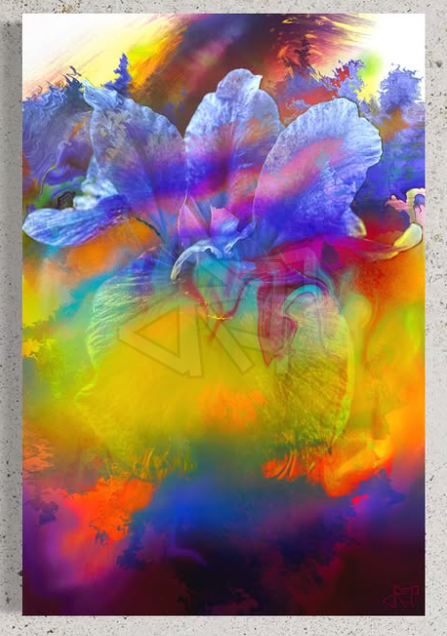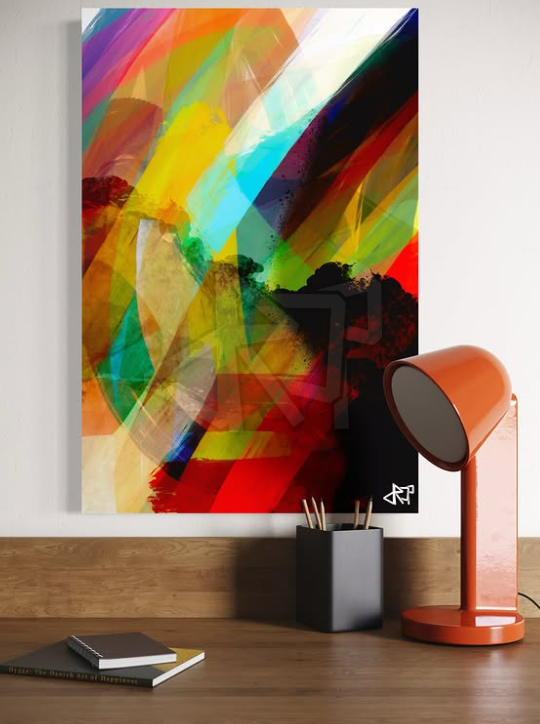


Personal artwork does not have to explain your story to everyone who sees it.
It does not need to show a recognizable place.
A portrait.
A house.
A specific event.
Or an exact recreation of a photograph.
Sometimes the most personal artwork is the piece that reveals almost nothing literally.
For homeowners considering custom abstract paintings in Syosset NY, this is one of the most interesting possibilities of commissioning original art.
We can begin with something completely real.
A memory.
A person.
A place.
A period of your life.
A family experience.
A feeling you want to remember.
Then, instead of illustrating that experience, we can translate it.
Maybe the memory becomes movement.
A place becomes color.
A photograph becomes a relationship between light and dark.
An emotion becomes texture.
A complicated experience becomes layers.
The finished artwork can remain abstract while still carrying something deeply personal underneath it.
That is what makes this process so interesting to me.
The painting does not need to tell everyone your story.
It only needs to hold something real for you.
Abstract Art Can Begin With Something Very Specific
People sometimes think abstraction means beginning without a subject.
That is not necessarily true.
Abstract artwork can begin with something incredibly specific and personal.
Georgia O’Keeffe described painting as a way of clarifying experiences that could not easily be expressed in words. The National Gallery of Art explains that her work could translate visual, emotional, sensual, and tactile experiences rather than simply illustrate an idea.
That distinction is important.
There is a difference between painting what something looked like and painting what the experience meant.
For a custom commission, we can begin with the second question.
A Memory Does Not Have to Look Like a Memory
Think about one of your strongest memories.
Do you remember every visual detail?
Probably not.
Memory does something strange.
It edits.
It removes things.
It exaggerates others.
Maybe you remember the color of the sky but not what anyone was wearing.
Maybe you remember the feeling of entering a room.
Perhaps you remember sunlight coming through a window.
A sound.
A texture.
A particular object.
Maybe you cannot explain why the moment matters at all.
You simply know that it does.
That is valuable creative information.
We do not need to reconstruct every detail.
We can work with what remained.
The Feeling May Be More Important Than the Image
Suppose you want a commission connected to a childhood summer.
We could create a recognizable scene from that place.
But perhaps the landscape itself is not what you actually miss.
Maybe you remember freedom.
Warmth.
Movement.
Quiet mornings.
A particular relationship with your family.
The feeling of having nowhere else you needed to be.
Those things cannot necessarily be painted literally.
But they can influence a painting.
A composition can feel open.
Color can create warmth.
Movement can create energy.
Texture can introduce physical memory.
The artwork can carry the emotional structure of the experience without becoming an illustration of it.
Personal Does Not Mean Obvious
This is something I believe strongly.
Artwork does not become more personal simply because its meaning is obvious.
Sometimes privacy makes the connection stronger.
Maybe one small color in the painting relates to something only you understand.
Perhaps a particular movement across the canvas comes from a landscape that matters to you.
Maybe several layers represent different stages of an experience.
Nobody else needs to know that.
They can encounter the artwork on their own terms.
You have another relationship with it because you know where it began.
Your Story Can Stay Yours
Not every meaningful experience needs to become a conversation with guests.
You may want artwork connected to someone important.
A difficult transition.
A private memory.
A place you no longer have.
A period of personal change.
The painting can carry that connection without announcing it.
When someone asks what the artwork means, you can explain it.
Or you can simply say that you love the piece.
Both answers are valid.
The meaning belongs to you.
A Photograph Can Be a Beginning, Not an Instruction
Photographs often become useful during a custom commission.
But I do not necessarily see them as images that need to be copied.
I want to know why you chose that particular photograph.
What matters inside it?
Is it the person?
The location?
The light?
A color?
The atmosphere?
The memory of what happened immediately before or after the photograph was taken?
Sometimes the least visually obvious part of the image is actually the most important part emotionally.
That is what we can explore.
We Can Extract Rather Than Reproduce
Imagine you have a photograph of the water from somewhere important to you.
A literal approach would reproduce the water.
An abstract approach gives us many more possibilities.
Maybe what matters is horizontal movement.
Perhaps it is the relationship between two colors.
Maybe the light creates a feeling of openness.
Perhaps the photograph reminds you of a quiet period in your life.
We can extract those qualities.
The finished painting might not look anything like the photograph.
Yet emotionally, it can remain connected to it.
A Place Can Become Movement
Places have rhythms.
A city feels different from a shoreline.
A crowded family home feels different from an empty field.
A forest has another kind of movement.
So does a road.
A harbor.
A garden.
A childhood bedroom.
When a place becomes inspiration for abstract artwork, I am interested in those qualities.
How did it move?
How did your eye travel through it?
Did it feel open or enclosed?
Was it calm?
Unpredictable?
Structured?
Those characteristics can influence composition without creating recognizable scenery.
Color Can Carry Memory
Color can become one of the strongest connections between personal experience and abstract art.
Sometimes people remember a color before they remember anything else.
The blue of a room.
The green surrounding a family property.
The warm tone of evening light.
The color of something a person always wore.
The strange gray of a particular day.
We can begin there.
But even then, I do not want the painting to become trapped by a literal palette.
The remembered color can become one part of a larger composition.
It can change.
Become darker.
Become quieter.
Interact with something unexpected.
Memory gives us the starting point.
The painting still needs room to become itself.
Color Can Express More Than Appearance
Color does not only describe what something looked like.
It can carry emotion.
Energy.
Tension.
Calm.
Distance.
Warmth.
This has long been part of abstract painting. The National Gallery of Art notes that Raymond Jonson sought to create paintings that embodied emotional, intellectual, and physical experience, with instinct and intuition playing important roles in his abstraction.
That is useful when thinking about a personal commission.
We do not have to ask only, “What color was it?”
We can ask, “What color feels like it now?”
Those can be completely different answers.
Texture Can Hold the Physical Side of Memory
Some experiences are remembered almost physically.
The roughness of a surface.
Sand.
Stone.
Wood.
Fabric.
Water.
Weather.
A wall in an old home.
Something worn from years of use.
Texture gives us another way to bring those memories into abstract artwork.
We do not need to recreate the actual material.
Instead, the painting can carry a physical quality inspired by it.
Layers.
Raised surfaces.
Scraped areas.
Smooth sections beside rough ones.
The artwork becomes something you experience physically as well as visually.
Layers Can Represent Time Without Explaining It
Life rarely happens in one clean layer.
Experiences accumulate.
Something happens.
Then something else changes how we remember it.
Years pass.
The memory becomes different.
A custom abstract painting can work in a similar way.
One layer may partially cover another.
Something can remain visible underneath.
An area can be changed without completely erasing what came before.
A mark can interrupt an earlier decision.
The final surface carries evidence of the process.
That can feel incredibly appropriate when the inspiration itself involves time, memory, or change.
Not Everything Has to Survive Into the Final Painting
This is another important part of abstraction.
We might begin with ten ideas.
Only two may remain visible.
That is fine.
Maybe we discuss a photograph, a place, three colors, a memory, a particular texture, and a feeling.
The finished painting does not need to contain a recognizable symbol for every one of those things.
The creative process involves deciding what matters.
Sometimes removing something makes the emotional direction clearer.
Abstraction Can Distill an Experience
This is one of the qualities I find most powerful.
Instead of adding every detail, we can reduce.
What is essential?
What can disappear?
What still communicates when the recognizable subject is removed?
The National Gallery’s discussion of O’Keeffe’s approach describes her desire to create an equivalent for what she felt rather than simply copying what she saw.
That idea gets very close to what personal abstraction can accomplish.
We are not reproducing an experience.
We are finding another visual language for it.
The Artwork Does Not Need a Secret Symbol for Everything
There is another direction that can become too literal.
Sometimes people think personal abstract art needs hidden symbols.
One shape represents one person.
Three lines represent three children.
A circle represents a home.
That can work when it feels authentic.
But it is not necessary.
Meaning can exist without a code.
The entire composition can carry the feeling.
You do not need to decode the artwork every time you look at it.
Sometimes the emotional connection is enough.
Your Home Can Also Become Part of the Inspiration
A custom commission does not need to begin only with your past.
It can respond to your present environment too.
If I am creating custom abstract paintings in Syosset NY, I want to understand where the artwork will live.
The wall.
The architecture.
Natural light.
Furniture.
Materials.
Sightlines.
How the room is used.
That information can exist alongside the personal inspiration.
Maybe the memory gives us the emotional direction while the architecture influences scale.
Perhaps the experience informs movement while natural light influences texture.
The final artwork becomes connected to both you and the place where you will live with it.
Personal Meaning and Interior Design Can Coexist
There is no reason meaningful artwork cannot also work beautifully within a room.
The two goals are not opposed.
We can think about scale.
Color relationships.
Architecture.
Light.
Placement.
Visual balance.
But I do not want those considerations to erase the personal foundation.
The painting should not become a matching exercise.
If the artwork only works because it repeats the current sofa color, the connection may disappear when the furniture changes.
Meaning gives the piece another reason to stay.
Do Not Let the Furniture Tell the Entire Story
Furniture changes.
Rugs change.
Walls get repainted.
Homes evolve.
Personal experiences remain part of you.
That is why I prefer using the interior as context rather than allowing it to dictate every artistic decision.
We can acknowledge the room.
Absolutely.
But the artwork should have enough independence to continue belonging after the room changes.
That gives the commission a much longer life.
Scale Can Change How Personal Artwork Feels
A personal commission does not have to be small and intimate.
A deeply meaningful idea can become a substantial painting.
At large scale, the experience changes.
Movement becomes more physical.
Color occupies more of your field of vision.
Texture becomes architectural.
You experience the composition from across the room before discovering smaller details up close.
The meaning remains personal even when the artwork has significant visual presence.
A Large Painting Can Still Feel Private
This is one of the beautiful contradictions of custom abstract art.
The piece can be the largest artwork in the room.
Everyone notices it.
Yet nobody necessarily understands its personal origin unless you tell them.
The painting can be visually public and emotionally private at the same time.
I think there is something powerful about that.
Personal Artwork Does Not Need to Be Sentimental
Meaningful does not automatically mean soft.
A personal experience may contain tension.
Contradiction.
Energy.
Loss.
Excitement.
Change.
Uncertainty.
A commission does not need to romanticize the experience.
Abstract art gives us room to acknowledge complexity.
The painting can contain both quiet and movement.
Darkness and light.
Control and irregularity.
Several emotions can exist together.
That may actually feel more truthful.
Difficult Experiences Can Be Approached Without Illustrating Them
Sometimes artwork is connected to a difficult chapter.
There may be no image you want to see every day that literally represents what happened.
That does not mean the experience cannot inform the work.
Perhaps what matters is transformation.
Resilience.
Release.
A sense of movement from one state toward another.
Maybe the artwork carries layers because the experience itself felt layered.
Abstraction allows us to work with emotional direction without creating an illustration of pain.
Joy Does Not Need to Become Bright Colors
The opposite is also true.
A joyful memory does not automatically require a bright palette.
Maybe the experience you associate with happiness was incredibly quiet.
Perhaps joy feels like openness.
Warmth.
Movement.
Balance.
The visual language should come from the actual emotional character rather than assumptions about what a feeling is supposed to look like.
That is where collaboration becomes important.
Custom Artwork Is a Collaboration
I do not see custom artwork as you hiring me to execute an image you already designed.
We create together.
You bring the things I cannot know without you.
Your experiences.
Memories.
Home.
Preferences.
Photographs.
Places.
Emotional connections.
The things you remember clearly and the things you can barely explain.
I bring interpretation.
Composition.
Texture.
Movement.
Color.
Materials.
And the creative instincts needed to translate those conversations into artwork.
The final piece develops between us.
That is why collaboration matters.
You Do Not Need to Be Able to Explain the Experience Perfectly
Sometimes people know something matters but struggle to explain why.
That is okay.
You might say:
“I keep thinking about this place.”
“This photograph means something to me, but I do not want a painting of the photograph.”
“I want the piece to feel like a certain period of my life.”
“I want something connected to my family without showing people.”
“I remember the light.”
“I want it to feel calm, but not empty.”
Those are enough to begin a conversation.
You do not need to arrive with artistic terminology.
My Role Is to Listen for What Is Underneath the Request
If someone tells me they want blue artwork, the conversation does not necessarily end with blue.
Why blue?
Is there a place behind it?
Does the color create calm?
Is it connected to water?
A memory?
Is it simply a color you have always responded to?
The reason can lead somewhere much more interesting than the original request.
Sometimes the first thing you ask for is only the doorway.
The Creative Process Needs Freedom
Collaboration does not mean determining every detail before creation begins.
A commission needs room to develop.
We may begin with a memory and a particular palette.
Then the painting starts moving somewhere unexpected.
A texture becomes important.
A planned color no longer belongs.
A section needs to disappear.
Another area needs more energy.
Those changes are not a rejection of the original inspiration.
They are part of translating it.
If the process is too rigid, the artwork risks becoming an execution rather than an original creation.
Intuition Has a Place in Personal Art
Not every decision needs an intellectual explanation.
Sometimes something feels right.
A mark.
A color.
An interruption.
An empty area.
That instinct can be valuable.
Artists have long used abstraction to combine structure with intuition. Raymond Jonson, for example, considered instinct and intuition central to a process aimed at translating emotional, intellectual, and physical experience into visual harmony.
Personal commissions can benefit from the same freedom.
We begin with meaning.
Then we allow the artwork to breathe.
The Finished Painting May Surprise Both of Us
That is not a problem.
It can be one of the best parts of the process.
You may initially imagine that a certain memory will create quiet artwork.
Then the final piece carries more movement than expected.
Perhaps you thought color would be the most important element, but texture becomes the emotional center.
Creative interpretation can reveal something neither of us anticipated at the beginning.
The artwork remains connected to the original experience.
It simply finds its own way of carrying it.
Your Relationship With the Piece Can Change Over Time
The meaning you attach to an experience today may not be the same meaning you attach to it ten years from now.
That is another reason abstraction can be so powerful.
Literal imagery can keep pointing you toward one interpretation.
Abstract artwork can leave room.
As your relationship with the memory changes, your relationship with the painting can change too.
Something that once represented one period may gradually accumulate new associations.
The artwork grows with you.
New Memories Begin Forming Around the Painting
This is something that happens after the commission is complete.
The artwork begins with one story.
Then it enters your home.
Life continues.
People gather in the room.
You see the painting every morning.
Different seasons change the light.
Furniture moves.
Years pass.
The artwork becomes connected to those experiences too.
Eventually, its meaning is no longer only about what inspired it.
It also carries everything that happened afterward.
Original Artwork Can Become a Personal Landmark
Certain objects become part of the way we remember a home.
A chair.
A table.
A photograph.
A painting.
Years later, you may remember the room partly through that object.
A meaningful custom artwork can become one of those landmarks.
It is there through ordinary days as well as important ones.
That accumulated familiarity can become as meaningful as the original inspiration.
Questions to Consider Before Commissioning Personal Abstract Art
If you are considering custom abstract paintings in Syosset NY, you do not need to arrive with a complete creative brief.
Start with a few questions.
Is there a person, place, memory, or experience you want the artwork to connect with?
What part of that experience do you remember most strongly?
Is it visual or emotional?
Is there a particular color you associate with it?
What textures come to mind?
Was the experience calm, energetic, complicated, or something else entirely?
Do you want the personal meaning to remain private?
Are there photographs that might help communicate the feeling?
Where will the artwork live?
How should it interact with the room?
Do you want the piece to feel intimate or substantial?
And perhaps the most important question:
What do you want to remember without having to see it literally?
That can become an incredibly meaningful place to begin.
My Custom Commission Process
My process begins with consultation.
We talk about the intended space, scale, natural light, architecture, and how you use the room.
Then we talk about the personal direction.
Your experiences.
Memories.
Photographs if they are relevant.
Places.
Colors.
Feelings.
Anything that helps me understand what exists underneath the commission.
Then comes creation.
I take those conversations into the studio and begin translating them through composition, texture, movement, color, materials, layering, and intuition.
There is direction.
But there is also room for discovery.
Once the artwork is complete, it is carefully prepared and delivered so it can begin its next life inside your home.
Consultation.
Creation.
Delivery.
The process is straightforward.
The meaning inside it can be incredibly personal.
How Personal Experiences Can Inspire Art Without Becoming Literal
We do not have to paint the memory.
We can paint from it.
That difference creates enormous freedom.
A place can become movement.
A photograph can become color.
A person can influence energy.
A difficult chapter can become layers.
A joyful experience can become openness.
A memory of nature can become texture.
The original inspiration remains underneath the artwork without determining exactly what everyone has to see.
That is where abstraction becomes deeply personal.
The artwork does not tell your story for you.
It gives the story another form.
Create Custom Abstract Paintings in Syosset NY With Gendrop Art
If you are considering custom abstract paintings in Syosset NY, you do not need to arrive with a finished image.
You can arrive with a memory.
A photograph.
A place.
A feeling.
An experience you cannot completely put into words.
Or simply the knowledge that you want the artwork to mean something.
From there, we collaborate.
You bring your experiences, perspective, home, preferences, memories, and emotional connection.
I bring interpretation, composition, texture, movement, materials, color, and my creative process.
Together, we create something original that can carry your experience without illustrating it literally.
Something personal without needing to explain itself.
Something other people can interpret freely while you understand the deeper reason it exists.
I also create original and custom artwork for homeowners and collectors throughout Huntington, Oyster Bay Cove, Brookville, Roslyn, Manhasset, Sands Point, Cold Spring Harbor, East Hampton, Westhampton, and Bridgehampton.
Explore custom commissions, original artwork, and limited edition prints at Gendrop Art.
Further Art and Creative Resources
For additional exploration of abstraction, emotion, artistic process, memory, and personal expression:
The Art Institute of Chicago
National Gallery of Art, Washington, DC
J. Paul Getty Museum, Los Angeles
San Francisco Museum of Modern Art
Los Angeles County Museum of Art
Walker Art Center, Minneapolis