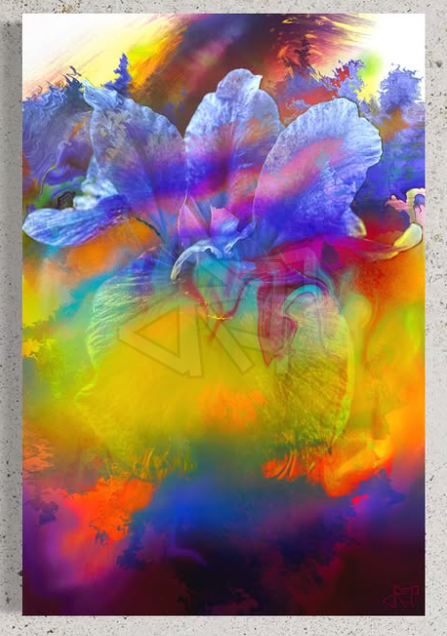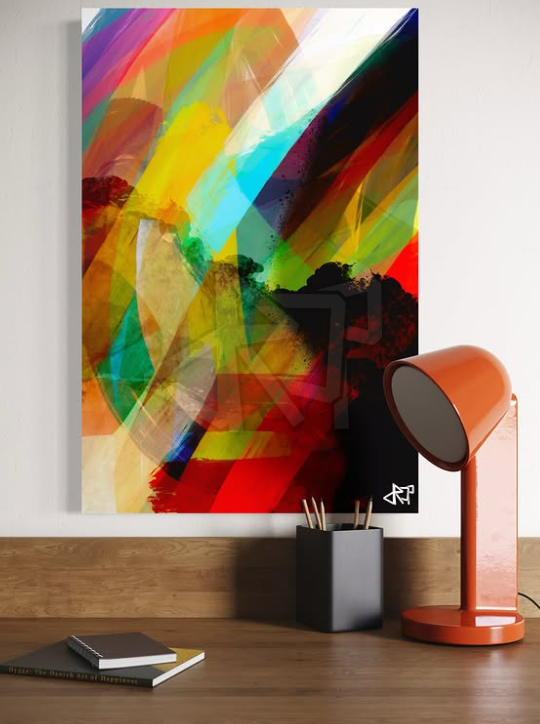

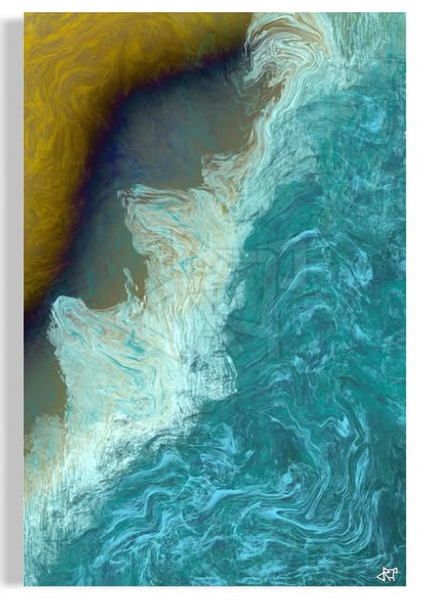
Large artwork changes a room before you have time to study it.
You feel the scale first.
Then the color.
Then the movement.
Only after that do you begin noticing the smaller details.
That is what makes large abstract art so powerful.
It is also what makes choosing it difficult.
When the proportions are right, a substantial piece of artwork can bring an entire room together. It can give a large wall purpose, create balance within the architecture, and introduce emotion into a space without adding clutter.
When the proportions are wrong, the opposite happens.
The artwork competes with everything around it.
The room begins to feel smaller.
Beautiful architectural details disappear.
Instead of creating presence, the piece creates pressure.
For homeowners searching for large abstract art in Sands Point NY, the answer is not simply choosing a smaller painting.
Large artwork can absolutely belong in a sophisticated home.
The real question is how the artwork relates to the architecture, furniture, natural light, negative space, and the way people actually move through the room.
Scale and proportion are fundamental to creating balanced interiors, and designers often recommend substantial artwork for large rooms because undersized pieces can feel disconnected from the architecture.
The goal is not to make the artwork less noticeable.
The goal is to give it enough room to breathe.
Large Does Not Automatically Mean Overwhelming
Size and visual intensity are not the same thing.
A very large painting can feel surprisingly calm.
A much smaller painting can dominate a room.
What creates that difference?
Composition.
Color.
Texture.
Contrast.
Movement.
Placement.
Negative space.
A large abstract piece with a restrained composition may create more visual calm than several smaller artworks competing for attention across the same wall.
That is why I do not believe square footage alone should determine whether large artwork is appropriate.
We need to consider how the artwork behaves within the space.
Start With the Architecture, Not the Painting
Before choosing artwork, look at the wall.
Then look beyond the wall.
What is happening around it?
How high are the ceilings?
Where are the windows?
Is there furniture below the artwork?
Does the wall connect visually with another room?
How far away will you normally see the piece?
What architectural details are already competing for attention?
These questions tell us much more than simply measuring width and height.
A tall, narrow wall naturally creates a different opportunity from a wide horizontal wall. Current guidance on displaying artwork similarly recommends using the proportions of the wall as a starting point, with vertical artwork often working naturally on taller, narrower walls and horizontal compositions responding better to wider spaces.
The architecture is already giving us clues.
We should listen to them.
Sands Point Homes Can Handle Significant Scale
One of the reasons large abstract artwork can work beautifully in Sands Point homes is that many interiors provide the architectural breathing room necessary for substantial pieces.
Generous living areas.
Tall ceilings.
Long sightlines.
Large windows.
Formal dining rooms.
Expansive entryways.
Open gathering spaces.
These environments can support artwork with presence.
But a large home does not automatically require enormous artwork everywhere.
That would become exhausting.
Scale should be intentional.
Sometimes one significant painting in the right location creates far more impact than filling every large wall.
Do Not Try to Fill the Entire Wall
This is one of the most important things to understand about large artwork.
An empty wall is not a container that needs to be filled.
The space around the artwork matters.
A lot.
Negative space allows the eye to understand the boundaries of the piece.
It gives the composition room to exist.
It creates separation between the artwork and surrounding architectural elements.
Without enough breathing room, even exceptional artwork can begin feeling cramped.
This is why I think about the wall and the artwork together.
Not:
“How much artwork can we fit here?”
But:
“How much space does this artwork need around it?”
Those are very different questions.
Bigger Can Actually Create More Calm
This sounds contradictory, but one large piece can sometimes make a room feel quieter than several smaller ones.
Why?
Because the eye has one visual destination.
There are fewer frames.
Fewer gaps.
Fewer competing compositions.
Fewer individual objects asking for attention.
Large format artwork can create a serene, gallery like presence precisely because it reduces visual clutter while establishing a clear focal point.
In a sophisticated Sands Point interior where architecture and materials are already doing a lot of work, that restraint can be extremely effective.
One artwork.
One conversation.
Enough space around it to let everything breathe.
Scale Should Respond to Viewing Distance
Think about how you actually experience artwork inside your home.
Sometimes you stand directly in front of it.
More often, you see it while doing something else.
Walking through the entryway.
Sitting across the living room.
Entering from another room.
Coming down the staircase.
Passing through the hallway.
That viewing distance matters.
A large abstract piece often needs enough scale to communicate from across the room.
From far away, you experience the overall composition.
The movement.
The balance.
The relationship between colors.
Then you approach it.
Now something else happens.
Texture becomes visible.
Layers appear.
Small marks begin to matter.
The artwork should reward both experiences.
Furniture Is Part of the Composition
Artwork does not float independently inside a room.
Furniture changes how we perceive it.
A large painting above a sofa needs to relate visually to the sofa.
Artwork near a console needs to acknowledge the width and height of that piece.
A dining room painting needs to make sense in relation to the table, chairs, lighting, and surrounding architecture.
This does not mean everything needs to align perfectly.
Perfect alignment can sometimes feel too controlled.
It means the visual weight should feel balanced.
Designers consistently emphasize that scale and proportion are central to making rooms feel balanced rather than accidental.
That relationship becomes especially important as artwork becomes larger.
Custom Artwork Gives Us Control Over Scale
This is where a custom commission becomes particularly useful.
When buying existing artwork, you are limited to the dimensions that already exist.
You might find something you love that is too narrow.
Too tall.
Too small.
Almost right.
But almost right can become very obvious on a significant wall.
With custom artwork in Sands Point NY, we can begin with the actual architecture.
We can look at the wall.
The furniture.
The ceiling height.
The sightlines.
The surrounding materials.
Then we can determine dimensions that make sense specifically for that environment.
The artwork does not need to force itself into the room.
It can be created around the room.
A Custom Commission Is a Collaboration
This is also why I consider custom artwork a collaboration rather than simply a service.
You are not hiring me, giving me measurements, and waiting for something to arrive.
We are creating together.
You understand the home.
You understand how you live there.
You know which rooms matter most to you.
You know what atmosphere you want to create.
You may have memories, experiences, colors, places, or emotions that you want the artwork to carry.
I bring my perspective as the artist.
I think about composition.
Texture.
Movement.
Scale.
Color relationships.
Material.
And how all of those things can translate what we discuss into something visual.
The final artwork develops between those perspectives.
That is where it becomes personal.
You Do Not Need to Know Exactly What You Want
Large artwork can feel intimidating because the commitment feels significant.
You may think you need to arrive with a complete idea.
You do not.
Sometimes the beginning is incredibly simple.
“This wall feels empty.”
“This room needs warmth.”
“I want something powerful but not loud.”
“I want movement.”
“I want something that feels connected to the water without literally painting the water.”
“I love the house, but this room feels too formal.”
Those statements are enough to begin a meaningful conversation.
We can work from there.
Large Artwork Does Not Need Loud Color
People often assume that large abstract artwork needs dramatic color to justify its scale.
It does not.
Scale already creates presence.
Sometimes restraint becomes even more powerful at a large size.
Subtle tonal shifts become expansive.
Texture becomes architectural.
Quiet areas of the composition create breathing room.
A limited palette can allow the size of the artwork to feel immersive without becoming aggressive.
This is especially useful when the surrounding room already contains significant materials, patterns, or views.
The artwork does not need to compete with them.
But Neutral Does Not Automatically Mean Calm
There is another misconception worth addressing.
Neutral artwork is not always quiet.
A painting can use restrained colors and still feel incredibly active.
Heavy texture can create movement.
Strong directional marks can create energy.
Sharp contrast between light and dark areas can create tension.
Likewise, a colorful painting can feel surprisingly peaceful if the composition is balanced.
That is why I think about the entire piece rather than simply choosing a palette.
Color is only one part of the emotional experience.
Texture Becomes More Powerful at Large Scale
Texture behaves differently when it expands across a substantial surface.
A small mark becomes part of a larger rhythm.
Layered areas interact with light across a wider field.
The physical surface begins to feel almost architectural.
From across the room, you see the composition.
From nearby, you see evidence of the process.
That change in experience is one of the things I find most interesting about large abstract artwork.
It can feel simple from a distance and incredibly complex up close.
Natural Light Can Change the Entire Piece
Sands Point homes with generous windows create another important consideration.
Natural light.
Large textured artwork does not look identical throughout the day.
Morning light may reveal subtle details across one side.
Afternoon light may strengthen the texture somewhere else.
At night, architectural lighting creates another experience entirely.
This is not a problem to solve.
It can become part of the artwork.
When creating a custom piece, understanding the intended wall and its lighting conditions gives us an opportunity to consider those changes from the beginning.
Do Not Compete With the View
Some Sands Point homes have beautiful relationships with the surrounding landscape and water.
If a room already contains a significant view, the artwork does not necessarily need to become another competing spectacle.
Sometimes the stronger approach is dialogue.
The artwork can respond emotionally to the environment without reproducing it.
Movement might quietly echo water.
Texture may reference natural surfaces.
A palette might connect with the environment without becoming literal.
The goal is not to create a second window.
It is to create something that belongs beside the first one.
Let the Artwork Have One Job
A large painting does not need to do everything.
It does not need to match every object.
Represent every memory.
Contain every favorite color.
Become the loudest thing in the room.
Sometimes the strongest creative direction is simple.
Give the room movement.
Create warmth.
Introduce tension.
Bring calm.
Anchor the wall.
Create curiosity.
Once we understand what the artwork needs to contribute, many other decisions become easier.
Think About Visual Weight
Two paintings with identical dimensions can feel completely different in scale.
A dark, dense composition may feel heavier.
An open composition with substantial negative space may feel lighter.
High contrast increases visual energy.
Soft transitions can make the same dimensions feel more relaxed.
This is why measurements alone cannot tell us whether artwork will overwhelm a room.
We also need to consider visual weight.
That becomes part of the custom process.
Give Important Architecture Room to Exist
If the room contains a beautiful fireplace, the artwork should not necessarily fight it.
If there is exceptional millwork, we should acknowledge it.
If a sculptural staircase is already a focal point, the painting may need a different role.
Large abstract art works best when it understands the hierarchy of the room.
Sometimes the artwork should lead.
Sometimes it should support.
A successful interior can contain significant art without allowing the art to overwhelm the design itself, something seen in homes where major contemporary collections and architecture are intentionally balanced rather than forced to compete.
That balance matters.
Do Not Automatically Center Everything
Centering artwork can be right.
But it should not become an automatic rule.
Architecture is not always symmetrical.
Furniture layouts are not always symmetrical.
The way people enter a room can create an entirely different visual center from the mathematical center of the wall.
Sometimes slightly shifting a composition creates a much stronger relationship with the room.
This is another reason I prefer looking at the entire environment rather than treating the wall like an isolated rectangle.
Installation Is Part of the Decision
Large artwork also brings practical considerations.
Weight matters.
Wall construction matters.
Mounting hardware matters.
Access matters.
The path into the home matters.
A very large piece may need to navigate staircases, hallways, doors, or elevators before it ever reaches the wall.
These things should be considered early.
Current professional guidance for hanging heavy artwork recommends understanding both wall type and artwork weight before choosing mounting hardware, and checking structural support when particularly heavy pieces are involved.
The artwork should not only look right.
It needs to work physically within the home.
Avoid Choosing Large Art Only for Impact
Large artwork naturally creates impact.
That should not be the only reason you choose it.
Ask yourself whether you actually want to live with the piece.
Not just show it.
Not just photograph it.
Live with it.
You will see the artwork on ordinary Tuesday mornings.
You will walk past it when nobody else is around.
You will experience it far more often than your guests ever will.
That relationship matters.
Design professionals similarly recommend choosing art based on genuine attraction rather than trends, because personal connection is more likely to endure as the room evolves.
Personal Meaning Can Make Large Art Feel Less Intimidating
A substantial painting becomes easier to live with when there is something behind it.
Maybe the commission is connected to a place.
A period of your life.
A feeling.
A memory.
The architecture.
The landscape.
The way you want your home to feel.
The inspiration does not have to become literal imagery.
It can be translated.
Emotion becomes movement.
Memory influences color.
Landscape becomes texture.
A personal experience becomes rhythm.
That gives the artwork a reason to exist beyond its dimensions.
Imperfection Helps Large Artwork Feel Human
Large spaces can sometimes become extremely polished.
Every surface is controlled.
Every line is precise.
Original artwork can introduce something different.
A mark made by hand.
An irregular layer.
Unexpected texture.
A section that refuses perfect symmetry.
Those details bring humanity into the room.
At large scale, they become especially interesting because you can experience them from multiple distances.
From across the room, they disappear into the composition.
Up close, they become the entire experience.
Consider How the Artwork Will Age With the Home
The sofa underneath the painting may eventually change.
The walls may be repainted.
The room may be renovated.
Your artwork should have enough independence to survive those changes.
That is why I would avoid designing a significant custom piece around temporary details alone.
We can acknowledge the current interior without becoming trapped by it.
Architecture.
Light.
Emotional direction.
Personal connection.
Those tend to provide stronger foundations than matching one specific accessory.
Large Abstract Art Can Create Intimacy
This may sound surprising.
We often associate large scale with drama.
But substantial artwork can also make a large room feel more intimate.
It gives the eye somewhere to settle.
It reduces the sense of endless wall space.
It creates a visual boundary within an open interior.
Designers sometimes use generously scaled elements specifically to make expansive rooms feel more grounded and intimate.
The right large artwork can do exactly that.
Questions to Ask Before Choosing Large Abstract Art
Before choosing or commissioning a significant piece, I would think about the following:
How do I want this room to feel?
Where will I usually see the artwork from?
What else already commands attention in the room?
How much negative space does the wall provide?
What are the ceiling proportions?
How does natural light move through the room?
Should the artwork lead the room or support it?
Do I want strong movement or something quieter?
How important is texture?
Is there a personal experience or emotion behind the commission?
Would I still want this artwork if the furniture changed?
And perhaps the most important question:
Do I want to live with this piece, or do I simply want it to impress me today?
Those are not always the same thing.
From Consultation to Creation
My custom commission process begins with understanding the space and the person who will live with the artwork.
During consultation, we can talk about the architecture, dimensions, natural light, emotional direction, preferences, and any experiences you want the work to carry.
Then comes creation.
This is where those conversations begin becoming something physical through composition, color, movement, texture, and intuition.
Because the process is collaborative, there is direction without eliminating creative freedom.
Once the artwork is complete, it is carefully prepared and delivered so it can finally become part of the environment that influenced it from the beginning.
The Right Large Artwork Should Make the Room Feel More Balanced
You should not walk into the room and think:
“That painting is enormous.”
At least, not forever.
Eventually, the artwork should simply feel right.
The architecture makes sense around it.
The furniture feels grounded.
The empty wall suddenly has purpose.
The room feels more complete without feeling more crowded.
That is the balance we are looking for.
Large abstract artwork does not need to overwhelm a space.
When scale, composition, texture, architecture, and emotion work together, it can do exactly the opposite.
It can make the room feel calmer.
More intentional.
More personal.
More complete.
Create Large Custom Abstract Art in Sands Point NY With Gendrop Art
If you are looking for large abstract art for your home in Sands Point NY, a custom commission gives us the opportunity to create around the actual space instead of forcing an existing piece to fit.
We can consider your architecture, natural light, dimensions, lifestyle, and the emotional experience you want the room to create.
Most importantly, we create together.
You bring the home, the perspective, and the things that matter to you. I bring interpretation, material, texture, composition, and my creative process.
The goal is not simply to make something large.
It is to create something that belongs.
I also create custom artwork for homeowners and collectors throughout Huntington, Oyster Bay Cove, Brookville, Roslyn, Manhasset, Syosset, Cold Spring Harbor, East Hampton, Westhampton, and Bridgehampton.