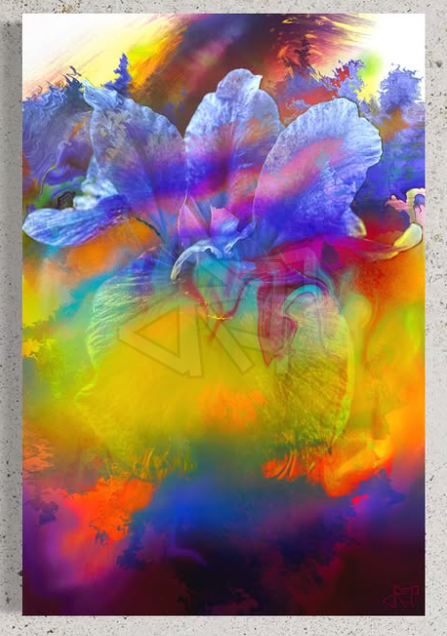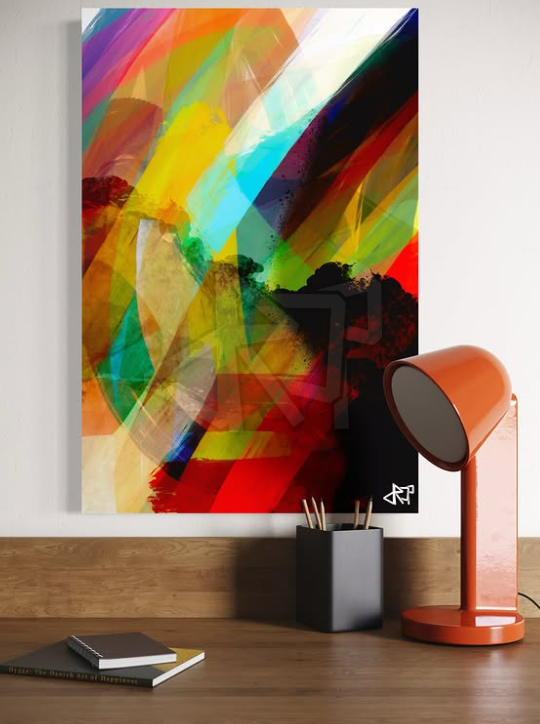


Custom abstract art does not begin with choosing a color that matches the sofa.
At least, I do not believe it should.
It begins with understanding what you want to experience when you walk into the room.
Maybe the space feels too controlled and needs movement.
Maybe it is visually beautiful but somehow still feels impersonal.
Maybe you want something quieter.
Something warmer.
Something that reminds you of a place, an experience, or a period of your life without literally showing it.
That is where color, texture, and emotion begin working together.
For homeowners searching for custom abstract art in Huntington NY, a commission offers the opportunity to create something that cannot be separated from the people and space behind it. Instead of selecting an existing piece and trying to make it fit, we can begin with the room, the emotional direction, and the things that matter to you.
Then we create together.
Because a custom commission is a collaboration.
You are not simply hiring me to execute an idea. You bring your perspective, memories, home, and emotional connection. I bring my interpretation, process, materials, and creative instincts.
Somewhere between those two perspectives, the artwork begins to become its own thing.
And that is where color, texture, and emotion matter most.
Custom Abstract Art Should Feel Personal Before It Looks Perfect
There is an understandable temptation to begin a commission by talking about appearance.
Blue.
Neutral.
Warm.
Minimal.
Large.
Textured.
Those details are useful, but they only describe the surface of what we are trying to create.
I am much more interested in what sits underneath them.
Why blue?
Why do you want the piece to feel calm?
Why does movement matter in this particular room?
Why are you drawn to rough texture instead of something smooth?
Sometimes there is no complicated answer.
You simply respond to something.
That response matters.
Other times, the reason leads somewhere unexpected.
Maybe a particular combination of colors reminds you of summers somewhere important.
Maybe an irregular surface feels more natural because you do not want the artwork to look overly controlled.
Maybe you are drawn to movement because the room itself feels too static.
Those conversations give the artwork direction without turning the process into a formula.
Why Abstract Art Works So Well in Personal Spaces
Abstract art does not need to tell you what to see.
That freedom is part of what makes it powerful inside a home.
A recognizable image usually establishes the subject immediately.
You see a landscape and understand that you are looking at a landscape.
You see a portrait and recognize the person.
Abstract artwork can operate differently.
You may see movement.
Someone else sees calm.
A particular section might remind you of water even though there is no water in the painting.
Another person might experience exactly the same area as sky, stone, weather, or nothing recognizable at all.
There is room for you inside the artwork.
That makes abstract art particularly interesting when the inspiration is emotional rather than literal.
Color Is Emotional Before It Is Decorative
Color has an immediate effect on the way we experience a piece.
But I do not approach color as a simple decorating tool.
The question is not only whether a color works with the interior.
It is what that color does emotionally.
A deep tone can create weight.
A lighter area can create breathing room.
Strong contrast can introduce tension.
A restrained palette can create quiet.
Unexpected color can interrupt an otherwise controlled composition and completely change its energy.
The relationship between colors often matters more than any individual shade.
That is why choosing a palette for custom artwork in Huntington NY should involve more than matching existing furnishings.
The artwork needs to live with the room without becoming trapped by it.
Your Sofa Will Not Always Be Your Sofa
This is worth remembering when commissioning original art.
Furniture changes.
Paint changes.
Rugs change.
Homes are renovated.
Artwork can remain for decades.
If we design an entire commission around matching one specific piece of furniture, we risk giving something permanent a temporary foundation.
I would rather understand the broader atmosphere of the home.
Are the interiors warm or cool?
Do you prefer strong contrast or subtle transitions?
Does the architecture feel traditional, contemporary, minimal, layered, or somewhere between?
Then we can create artwork that belongs in the environment without becoming dependent on every object currently inside it.
That gives the piece room to grow with you.
Texture Changes How You Experience Color
Color does not exist independently from the surface beneath it.
Put the same color across two different textures and it can feel completely different.
A smooth area reflects light one way.
A heavily layered surface catches it differently.
Edges create small shadows.
Uneven materials create variation.
A color that appears quiet from across the room may reveal extraordinary complexity when you stand close to it.
That interaction is one of the reasons I am drawn to texture.
It gives color somewhere to live.
Texture Makes Original Artwork Physical
There is a point where a painting stops feeling like an image and starts feeling like an object.
Texture helps create that shift.
When you see original artwork in person, you can experience the physical decisions that went into it.
Layers.
Marks.
Build up.
Areas that were changed.
Places that were left alone.
Imperfections that became part of the final composition.
These qualities are difficult to understand completely through photographs.
They exist physically.
And once the artwork enters your home, the architecture and lighting begin interacting with them.
That relationship becomes part of the piece.
Natural Light Never Leaves the Artwork Alone
Imagine an original textured painting hanging in a room with substantial natural light.
At 8:00 in the morning, the surface looks one way.
Later in the afternoon, it looks different.
As sunlight moves across the room, tiny shadows appear and disappear.
Certain areas become stronger.
Others recede.
At night, artificial lighting creates another version of the same painting.
The artwork has not physically changed.
Your experience of it has.
For me, that is one of the most interesting qualities of textured abstract work.
It refuses to remain completely static.
Huntington Homes Can Give Artwork Room to Breathe
Huntington offers an incredible variety of residential environments.
Traditional homes.
Updated interiors.
Contemporary spaces.
Waterfront properties.
Homes surrounded by mature landscapes.
Large gathering areas.
More intimate rooms.
That variety means there is no single answer to what custom abstract artwork in Huntington should look like.
And there should not be.
The architecture needs to be part of the conversation.
A substantial living room wall may allow for a composition that unfolds across a large surface.
An intimate study may need something quieter.
A bright room may invite texture that changes dramatically throughout the day.
A formal space may benefit from artwork that introduces something less controlled.
The home gives us information.
We should use it.
Emotion Does Not Need to Become Illustration
Suppose the inspiration for a commission comes from a meaningful place.
We do not necessarily need to paint that place.
Suppose the artwork is connected to a person.
We do not necessarily need a portrait.
Suppose you want the piece to carry a feeling of freedom.
There is no need to illustrate freedom literally.
This is where abstraction creates possibilities.
Emotion can become movement.
Memory can influence color.
A landscape can become texture.
Energy can become composition.
The original inspiration remains present, but it has been translated rather than copied.
That translation is often what makes a custom abstract piece feel personal without becoming obvious.
A Custom Commission Is a Conversation
When someone comes to me for a custom commission, I do not expect them to speak like an artist.
You do not need to know technical terms.
You do not need to explain exactly what composition you want.
You do not need to arrive with a finished sketch.
Tell me what you know.
Tell me what you feel.
Tell me what you keep noticing.
Tell me what you do not want.
Show me the room.
Show me photographs that matter to you if they are relevant.
Tell me why you are commissioning the piece now.
Those conversations give us somewhere real to begin.
Collaboration Does Not Mean Controlling Every Brushstroke
There is an important balance in the commission process.
For artwork to become genuinely collaborative, both sides need room to contribute.
You should feel represented in the work.
Your ideas should matter.
The space should matter.
The emotional direction should matter.
But there also needs to be room for interpretation.
If every mark is predetermined, the creative process becomes execution rather than collaboration.
Sometimes something happens while creating the artwork that changes the direction slightly.
A texture develops unexpectedly.
A particular color needs more space.
An area becomes stronger when something is removed rather than added.
Those decisions are part of making art.
The final piece benefits when there is enough trust for those moments to happen.
Imperfection Gives Abstract Art Its Humanity
Perfect surfaces can be beautiful.
But perfection is not always interesting.
Our eyes notice irregularity.
We notice where something changes.
Where a line breaks.
Where texture becomes uneven.
Where a mark appears that could not have been mechanically reproduced.
Those moments give artwork personality.
I do not believe every imperfection needs to be corrected.
Sometimes the thing that initially looks imperfect is exactly what keeps the piece alive.
That matters in a home because you are not looking at the artwork once.
You are living with it.
Emotion Can Change During the Creative Process
A commission may begin with one emotional direction and gradually become more complex.
Maybe we begin talking about calm.
But complete calm feels flat.
The piece needs tension somewhere.
Or perhaps the initial concept is energetic, but too much movement overwhelms the room.
So quieter areas become necessary.
Emotion in artwork rarely exists in isolation.
Calm feels stronger beside movement.
Light feels more powerful beside darkness.
Open space becomes more noticeable beside texture.
Those relationships help create emotional depth.
Scale Influences Emotion Too
Color and texture receive a lot of attention, but scale can be equally emotional.
A small piece asks you to move closer.
It can create intimacy.
A large artwork interacts with your body differently.
You experience it before you inspect it.
It can change the atmosphere of an entire room.
That is why scale should be considered early in a custom commission.
If the piece is being created for a particular wall, I want to understand the proportions of that wall and everything surrounding it.
Ceiling height.
Furniture.
Windows.
Sightlines.
Viewing distance.
The artwork should have enough presence for the architecture without overwhelming it.
Negative Space Is Part of the Artwork
Not every inch of a painting needs activity.
And not every inch of a wall needs artwork.
Space matters.
Within the composition, quieter areas allow textured sections to feel stronger.
Within the room, negative space around the artwork gives it room to exist.
This is especially important with larger custom pieces.
The goal is not necessarily to cover as much wall as possible.
The goal is to create the right relationship between the artwork and everything around it.
The Best Palette May Include Something Unexpected
A custom commission should have direction.
But I like leaving room for discovery.
Sometimes the color that changes the entire piece is not one we discussed at the beginning.
It may appear in a small area.
It may create contrast.
It may interrupt a palette that had become too comfortable.
Those unexpected decisions can make the final artwork feel alive rather than overplanned.
That does not mean ignoring the client’s preferences.
It means allowing the collaboration to produce something beyond what either of us could have specified at the beginning.
Your Home Is Part of the Creative Process
When creating custom artwork for a specific home, I am not creating in isolation.
The room matters.
If there is natural stone nearby, I want to understand its texture.
If the home contains warm wood, that matters.
If the architecture is highly symmetrical, perhaps the artwork needs to reinforce that balance or deliberately challenge it.
If the room overlooks water or trees, the environment may influence the work without becoming literal subject matter.
This is why custom art can feel so different from simply buying a finished piece.
The home has been present in the process from the beginning.
Personal Artwork Does Not Need to Announce Its Meaning
One of my favorite possibilities with custom abstract art is that the meaning can remain private.
Your guests do not need to understand why a certain movement exists.
They do not need to know why a particular color matters.
They can experience the artwork on their own terms.
Meanwhile, you carry another layer.
You know the conversation.
You know the starting point.
You know what changed.
You know why certain decisions matter.
That private relationship can become one of the most valuable aspects of the commission.
What Happens When Artwork Is Created From a Memory?
A memory is not a photograph.
It is incomplete.
Certain details are incredibly clear.
Others disappear.
Emotion changes the way we remember things.
That makes memory fascinating material for abstract artwork.
Instead of trying to reconstruct every factual detail, we can explore what remained.
Was it the light?
A color?
Movement?
Stillness?
A particular feeling?
That becomes the material.
The goal is not documentation.
It is interpretation.
Original Artwork Can Become More Personal After It Is Finished
The collaboration gives the artwork its first story.
Living with it creates the next one.
Over the years, the piece becomes associated with the room.
The people who gather there.
The conversations that happen beneath it.
Celebrations.
Quiet evenings.
Changes in the family.
Eventually, you may look at the artwork and remember much more than the original reason it was commissioned.
That accumulation of meaning is something I find incredibly powerful about original art.
How to Know What You Want From a Commission
You do not need all the answers.
But there are useful questions to consider.
What room will the artwork live in?
How should that room feel?
What do you already love about the space?
What feels missing?
Are there colors you naturally return to?
Are there textures you respond to?
Do you want the artwork to create movement or stillness?
Should it become a focal point or work more quietly within the architecture?
Is there a memory, place, experience, or emotion behind the commission?
And perhaps most importantly:
What would make this piece feel like yours?
That question can lead us somewhere interesting.
Consultation, Creation, and Delivery
My custom commission process begins with consultation.
This is where we talk about your vision, your home, your preferences, and the emotional direction behind the piece.
Then comes creation.
I take what we have discussed and begin translating those ideas through color, texture, composition, movement, and intuition.
This is where the artwork needs room to become itself.
Once the piece is complete, it is carefully prepared and delivered so it can finally enter the environment that influenced its creation.
The process is straightforward.
What makes it meaningful is everything we discover within it.
Why Custom Abstract Art Can Feel Different From Anything Else in Your Home
Most things in a home are selected.
Custom artwork is created.
That difference matters.
The piece did not exist before the conversation.
There was no identical version waiting somewhere else.
It developed because of your home, your ideas, and our collaboration.
Color carries more than decorative purpose.
Texture gives those colors physical presence.
Emotion gives the composition a reason to exist.
Together, those elements create something that is not simply designed to look good on a wall.
It is designed to become part of your experience of the room.
Create Custom Abstract Art in Huntington NY With Gendrop Art
If you are searching for custom abstract art in Huntington NY, I want the process to be more than choosing dimensions and approving a color palette.
I want us to create together.
Your home, experiences, preferences, and emotional connection become part of the conversation. My role is to interpret those ideas through an original artistic process and create something that feels alive, personal, and connected to the space where it will live.
I also create original and custom artwork for homes throughout Oyster Bay Cove, Brookville, Roslyn, Manhasset, Sands Point, Syosset, Cold Spring Harbor, East Hampton, Westhampton, and Bridgehampton.