
A large wall creates an interesting opportunity.
It can become one of the most memorable parts of a home.
But it can also become one of the easiest spaces to overthink.
When homeowners see a substantial empty wall, the instinct is often to fill it. More artwork. More furniture. More objects. More color. More visual activity.
That is not always what the room needs.
For homeowners considering large wall art in East Hampton NY, I believe the goal should be creating a focal point without making the artwork compete with everything around it.
Large artwork already has presence because of its scale.
It does not necessarily need intense color, complicated imagery, multiple surrounding pieces, or a wall filled from edge to edge.
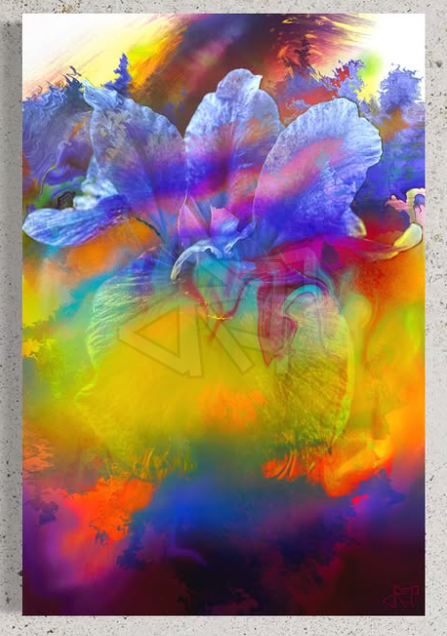
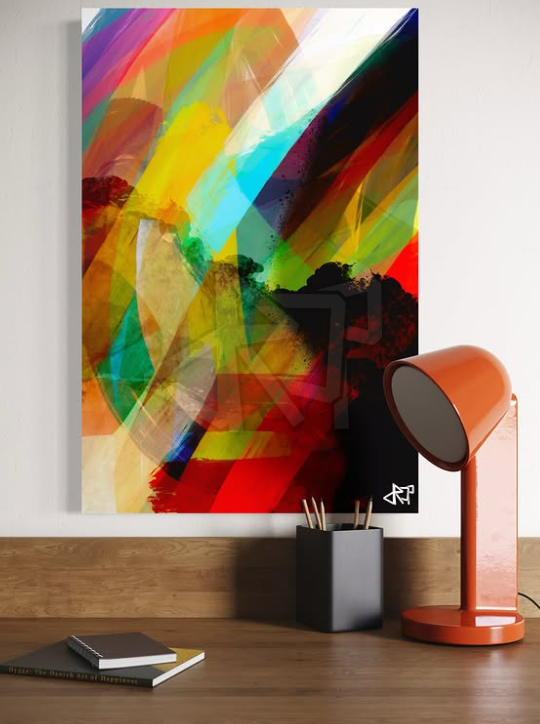
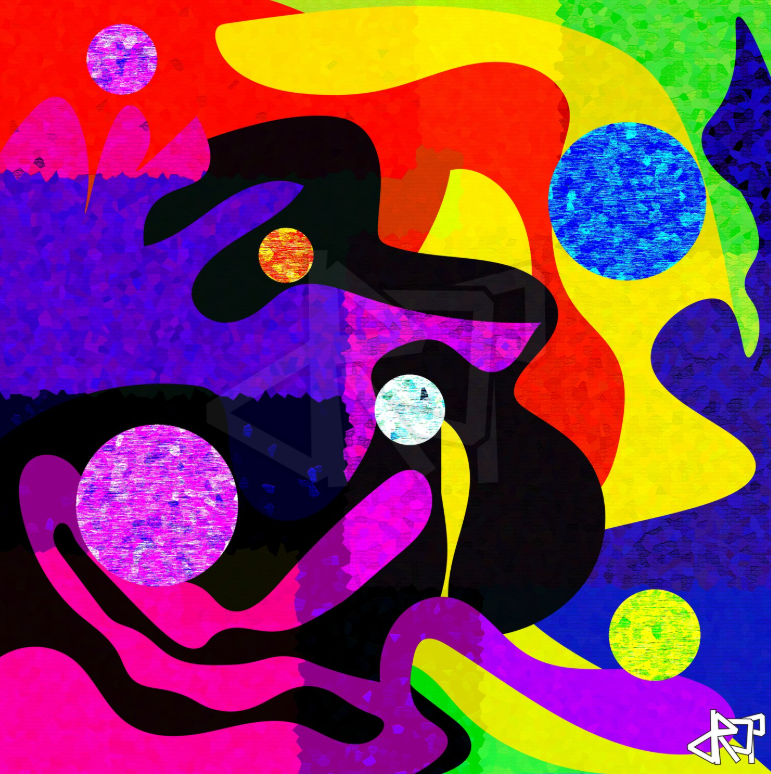
Sometimes one original artwork with the right proportions, movement, texture, and breathing room can make an entire space feel more complete.
The challenge is knowing when enough is enough.
A Focal Point Does Not Need to Be the Loudest Thing in the Room
People sometimes think a focal point needs to demand attention.
I see it differently.
A strong focal point gives your eye somewhere to settle.
That can happen through scale.
Composition.
Contrast.
Texture.
Placement.
Or even quietness.
A large abstract painting with restrained color can become more powerful than several smaller, brighter pieces because it creates one clear visual moment.
The National Gallery of Art’s discussion of compositional balance demonstrates how relationships between mass and open space, light and dark, and different directional elements can create a composition that feels balanced without becoming static.
That same principle can be useful when thinking about artwork inside a room.
Visual strength does not require visual chaos.
Start With the Room, Not the Wall
Before choosing large artwork, I want to understand the entire room.
The wall matters.
But so does everything around it.
How high are the ceilings?
Where are the windows?
What furniture sits nearby?
Is there a fireplace?
Can you see the artwork from another room?
Is there a significant outdoor view?
What happens when you enter the space?
Where does your eye naturally go?
A large wall may technically accommodate a huge piece, but that does not automatically mean the artwork should occupy every available inch.
Scale needs context.
East Hampton Homes Can Already Have Strong Visual Elements
A home does not begin as an empty container waiting for artwork.
Architecture already communicates.
Windows create rhythm.
Stone introduces texture.
Wood adds warmth.
Furniture creates shape.
Lighting adds another visual layer.
And in many East Hampton homes, the surrounding landscape can have a strong presence inside the interior.
Artwork enters that existing conversation.
If the room already contains several significant elements, the painting does not need to become another source of competition.
It can bring those elements together.
Look at What the Room Is Already Asking You to Notice
This is one of the first things I would consider.
Maybe the architecture is the strongest feature.
Perhaps there is a beautiful view.
Maybe a sculptural staircase already dominates the room.
Perhaps the fireplace has significant visual weight.
If several elements are already asking for attention, artwork may need to play a more measured role.
That does not mean making it insignificant.
Large artwork can remain substantial while using quieter color, more open composition, or restrained movement.
The scale creates the presence.
Everything else can become more subtle.
One Large Piece Can Feel Calmer Than Several Small Ones
This can seem counterintuitive.
You might assume that a larger artwork automatically makes a room feel busier.
Often, one substantial piece can do the opposite.
Imagine a large wall covered with six or eight individual works.
Each has its own frame.
Its own colors.
Its own composition.
Its own visual boundaries.
Your eye moves between them.
Now imagine one original abstract painting occupying that same general area.
There is one composition.
One visual rhythm.
One relationship with the architecture.
The larger artwork can actually simplify the room.
Do Not Fill the Entire Wall
A large wall does not need to disappear behind artwork.
The space around the piece matters too.
Breathing room helps establish importance.
If a painting is pushed too close to architectural edges, furniture, windows, or other artwork, it can begin feeling crowded.
Allowing visible wall around the piece gives the composition somewhere to exist.
That negative space becomes part of the presentation.
The artwork feels intentional rather than squeezed into position.
Negative Space Inside the Artwork Matters Too
The same idea applies to the composition itself.
Large artwork does not need visual activity everywhere.
Quiet areas can be incredibly important.
They allow stronger marks to matter.
They create rhythm.
They give movement somewhere to travel.
They prevent a substantial piece from feeling visually exhausting.
This principle appears throughout art history in very different forms. The National Gallery, for example, notes Georgia O’Keeffe’s emphasis on balance and unfilled space in Winter Road I, where a relatively simple abstracted line carries much of the composition.
Large scale and simplicity can work beautifully together.
Scale Creates Its Own Kind of Drama
Once artwork becomes large enough, its physical presence changes the room.
You notice it before you understand it.
That means the painting does not need every other possible form of impact.
It does not necessarily need the brightest color.
The strongest contrast.
The most complicated composition.
The heaviest texture.
Scale is already doing something.
The question becomes what we want everything else to contribute.
Sometimes restraint allows scale to become more powerful.
Measure the Wall, Then Look Beyond the Numbers
Measurements are essential.
But measurements alone do not tell us what size the artwork should be.
A ten foot wall does not automatically require a painting that occupies a predetermined percentage of it.
I want to understand what else is happening.
Is there furniture beneath the piece?
How high is that furniture?
Where does the ceiling begin?
Is the artwork viewed from nearby or from across a large room?
Does another architectural feature sit beside it?
These relationships influence scale more than the wall dimensions alone.
Viewing Distance Changes Everything
Large wall art is often experienced first from a distance.
That means the overall composition needs to work before the smaller details become visible.
From across the room, you might notice:
Movement.
Balance.
Color relationships.
Large forms.
Negative space.
Then you approach.
Now the experience changes.
Texture appears.
Layers become visible.
Marks become more specific.
Small irregularities begin to matter.
I like artwork that can work at both distances.
It contributes to the architecture from far away and becomes more personal when you move closer.
Texture Can Create Interest Without Creating Clutter
This is one of the reasons texture can be so valuable in large abstract artwork.
You can keep the palette relatively restrained while allowing the surface to create complexity.
Texture interacts with light.
Raised areas cast subtle shadows.
Layers appear differently depending on where you stand.
The artwork can remain visually calm from across the room while becoming much more detailed when you approach it.
That gives you richness without filling the room with additional objects.
Natural Light Should Influence the Decision
Before choosing large wall art, look at the intended location throughout the day.
What happens in the morning?
What happens in the afternoon?
Does direct sunlight reach the wall?
Does the room remain softly illuminated?
Where are the windows?
Does the light arrive from the side?
These details can completely change the experience of an original painting.
Texture becomes especially sensitive to changing light.
A surface that appears subtle in the morning may become dramatically more visible several hours later.
Artwork Can Change With the East Hampton Light
One of the things I find compelling about original artwork is that it does not need to look identical every hour.
The painting remains physically unchanged.
The experience does not.
Morning can reveal one part.
Afternoon can emphasize another.
At night, artificial lighting creates a different relationship with the surface.
That change gives the artwork another dimension.
Instead of creating interest by surrounding the piece with more decoration, the artwork itself keeps offering something different.
Consider the Landscape Before Choosing the Palette
If the room has a strong connection with the outdoors, the landscape should be part of the conversation.
But that does not mean copying it.
A view of trees does not require green artwork.
Water does not automatically require blue.
A sunset does not mean orange needs to appear on the canvas.
I am more interested in the emotional qualities of the environment.
Does the landscape create openness?
Movement?
Stillness?
Rhythm?
Does the room need to continue that feeling or interrupt it?
Those questions can lead to much more interesting artwork than simply repeating colors from outside.
Do Not Make the Painting Compete With the View
If a room already has an extraordinary view, there may be no reason to create another spectacle directly beside it.
The artwork can have another role.
Perhaps the view is expansive and the painting becomes more intimate.
Maybe the landscape contains enormous movement and the artwork creates stillness.
Perhaps the exterior is visually soft while the painting introduces physical texture.
Contrast can create harmony.
The artwork and landscape do not have to perform the same job.
Color Matching Can Make a Room Feel Busier
This sounds strange, but perfect coordination can sometimes create more visual noise.
If the painting repeats every major color in the room, the eye begins finding connections everywhere.
The sofa connects to the painting.
The painting connects to the rug.
The rug connects to the pillows.
Everything starts explaining everything else.
Sometimes artwork becomes more powerful when it has a little independence.
It can acknowledge the interior without becoming a summary of it.
Choose a Color Relationship Instead of an Exact Match
Rather than asking whether the painting contains the exact tone from the furniture, I prefer broader questions.
Is the room warm or cool?
Does it need contrast?
Does it need energy?
Would a darker artwork create depth?
Would a restrained palette allow the architecture to remain dominant?
Could one unexpected color make the painting feel more alive?
These questions create room for originality.
Large Neutral Artwork Can Still Have Enormous Presence
Neutral does not have to mean invisible.
A painting can use subtle tonal relationships while creating interest through texture, composition, movement, and scale.
In fact, large neutral artwork can sometimes become more powerful because the viewer has to spend time with it.
The impact is not based on immediate color intensity.
It develops gradually.
You begin noticing small changes.
Layers.
Shadows.
Marks.
The physical surface.
Quiet artwork can still hold a room.
Contrast Does Not Always Mean Color
Contrast can happen in many ways.
Smooth architecture beside textured artwork.
A highly symmetrical room beside an irregular composition.
Hard stone beside softer visual movement.
An expansive space beside a painting containing intimate details.
A bright room beside deeper tones.
A minimal interior beside expressive marks.
These relationships can create visual interest without requiring a complicated palette.
The Furniture Beneath the Artwork Matters
If large artwork will hang above furniture, the two elements need to relate.
That does not mean they need to match.
It means their proportions should make sense together.
A very small piece above a substantial console can feel disconnected.
An oversized painting pushed too close to furniture can feel compressed.
There needs to be enough separation for the artwork to maintain its own presence while still feeling connected to the arrangement beneath it.
This is another reason custom dimensions can be useful.
Custom Artwork Gives Us Control Over Scale
Finding existing artwork for a very large wall can be difficult.
You may love the piece but not the dimensions.
Or the dimensions may work while the artwork itself feels wrong.
A custom commission allows us to begin with the actual environment.
We can consider the wall.
Ceiling height.
Furniture.
Sightlines.
Natural light.
Architecture.
And the emotional direction of the room.
Then scale becomes part of the creative process instead of a compromise made afterward.
Custom Artwork Is a Collaboration
When I create custom artwork, the process is not simply about you hiring me to make something large enough for a wall.
It is a collaboration.
You bring information I could never invent.
Your home.
Your experiences.
Your preferences.
Your memories.
The way you use the room.
The things you respond to.
The things you do not want.
I bring interpretation.
Composition.
Texture.
Movement.
Materials.
Color.
And my creative process.
The finished piece develops between those perspectives.
That is what allows it to feel personal without requiring you to design the painting yourself.
You Do Not Need to Arrive With the Finished Idea
A large commission can feel intimidating because the scale makes the decision seem permanent.
You may think you need to know exactly what you want before beginning.
You do not.
You might only know:
“I want this wall to feel important.”
“The room feels too empty.”
“I want something quiet but substantial.”
“I love texture.”
“I want movement without too much color.”
“I want something personal without making the meaning obvious.”
Those are useful starting points.
My role is to interpret them visually.
Personal Meaning Can Make a Large Piece Feel More Intimate
Large artwork does not need to feel impersonal.
Scale and intimacy can exist together.
Perhaps the commission begins with a memory.
A place.
A photograph.
An experience.
A particular feeling.
That inspiration can become abstract.
A memory might influence the palette.
A landscape might become movement.
A photograph could inspire one relationship between light and dark.
The finished piece does not need to explain its source.
You can know what exists underneath it.
That private connection can make even a very large artwork feel intimate.
A Photograph Can Inspire Without Dictating
Sometimes people approach custom artwork with a meaningful photograph.
That can be a wonderful starting point.
But we do not necessarily need to reproduce the photograph.
Instead, we can ask what actually matters about it.
Is it the light?
A color?
A particular sense of movement?
The atmosphere?
The memory attached to the moment?
Those elements can become creative material.
The final artwork can remain abstract while carrying something real.
Avoid Adding Too Many Supporting Pieces
Once a major artwork is installed, give it time.
Do not immediately assume the surrounding wall needs more.
A large painting may already be doing enough.
Adding smaller works beside it can dilute the focal point.
The same applies to decorative objects.
If every surface around the artwork is filled, the eye has nowhere to rest.
Let the piece have space.
Restraint can make the entire room feel more intentional.
A Focal Point Needs Hierarchy
If everything is important, nothing feels important.
That principle matters throughout a room.
A dramatic fireplace.
A sculptural light fixture.
A significant outdoor view.
A large painting.
A statement furniture piece.
Each one might be beautiful individually.
But if they all demand equal attention at the same moment, the room can feel busy.
Decide what should lead.
Then allow the other elements to support it.
Sometimes the artwork leads.
Sometimes it does not.
Both approaches can work.
Artwork Can Balance a Dramatic Architectural Feature
A focal point does not always need to exist alone.
Sometimes large artwork is useful because it balances something else in the room.
A substantial fireplace on one side may need visual weight elsewhere.
A wall of windows might create a strong horizontal emphasis that artwork can counter.
A tall ceiling might benefit from a vertical composition that connects the furniture to the architecture above.
The goal is not always dominance.
Sometimes it is equilibrium.
Composition Matters More as Scale Increases
Large artwork magnifies every decision.
A small area of visual tension becomes physically larger.
Movement travels farther.
Negative space becomes more noticeable.
Color occupies more of your field of vision.
That means composition needs to hold together.
The National Gallery’s discussion of Robert Mangold’s large scale Yellow Wall emphasizes the work’s careful balance of shape and color and its attention to the relationship between individual parts and the whole.
That relationship between part and whole becomes especially important when artwork begins operating at architectural scale.
Symmetry Is Not Required for Balance
A room does not need perfect symmetry to feel resolved.
Neither does artwork.
Visual balance can come from relationships between different weights, shapes, areas of activity, and open space.
The National Gallery describes Mondrian’s abstract compositions as carefully calibrated examples of balanced asymmetry, showing that equilibrium does not require identical elements on both sides.
That is useful when thinking about both the painting and the room around it.
Balance can feel natural without feeling rigid.
Let the Artwork Introduce Imperfection
Highly designed homes often contain extraordinary precision.
Stone aligns.
Millwork is carefully finished.
Furniture placement is intentional.
Lighting is controlled.
Original artwork can introduce something those elements do not.
Imperfection.
An uneven mark.
A surface that changes unexpectedly.
A layer that remains partially visible.
Evidence that decisions happened during the process.
That humanity can prevent a refined room from feeling overly controlled.
Do Not Choose Large Art Only for Immediate Impact
A dramatic first impression is exciting.
But you are not going to experience the artwork only once.
You may see it every day for years.
That changes the question.
After the initial impact disappears, what remains?
Texture?
Movement?
Meaning?
Subtle details?
A personal connection?
A composition that keeps revealing something?
Large artwork needs enough depth to survive familiarity.
The Best Focal Point Can Become Part of Everyday Life
Eventually, you may stop consciously thinking about the artwork every time you enter the room.
That does not mean it has lost importance.
It means it has become part of the home.
You see it in different light.
Guests gather around it.
Furniture changes beneath it.
Different seasons alter the landscape outside.
Years pass.
Then you imagine the wall without the piece.
Suddenly, the room feels wrong.
That is when artwork has become more than a focal point.
It belongs.
Large Artwork Should Still Work if the Room Changes
This is another reason not to make the artwork too dependent on the current furniture.
Homes evolve.
The sofa may change.
The rug may disappear.
Walls may be repainted.
A room may be redesigned.
The artwork should have enough identity to survive those changes.
Strong composition.
Personal meaning.
Texture.
Movement.
Emotional connection.
Those qualities can last much longer than a decorating trend.
Questions to Ask Before Choosing Large Wall Art
If you are considering large wall art in East Hampton NY, spend time with the room before making a decision.
Ask yourself:
What is already the strongest feature in this room?
Should the artwork become the focal point or support another one?
From where will I normally see the piece?
How much breathing room does the wall provide?
Does the room need more movement or more calm?
How does natural light affect the intended wall?
Does the space already contain a lot of visual activity?
Would one large piece work better than several smaller ones?
Am I relying too heavily on color matching?
Could texture create interest instead?
Would I still love the artwork if the furniture changed?
Does the piece give me something beyond immediate impact?
And perhaps most importantly:
What should my eye feel when it arrives at this wall?
Rest?
Curiosity?
Energy?
Connection?
That answer can tell us much more than the dimensions alone.
My Custom Commission Process
My commission process begins with consultation.
We talk about the wall.
But we also talk about the entire room.
Architecture.
Scale.
Natural light.
Furniture.
Sightlines.
Materials.
Landscape.
And how you actually use the space.
Then we talk about you.
Your preferences.
Your experiences.
Your memories.
The emotional direction you want the artwork to carry.
From there comes creation.
I translate those conversations through composition, color, texture, movement, materials, and intuition.
There is direction, but there is also room for discovery.
Original artwork needs that freedom.
Once the piece is complete, it is carefully prepared and delivered so it can become part of the environment that influenced it from the beginning.
Consultation.
Creation.
Delivery.
The process is straightforward.
The result is personal.
Creating a Focal Point Without Making the Room Feel Busy
The answer is not necessarily smaller artwork.
It is intentional artwork.
Understand the architecture.
Choose the right scale.
Create hierarchy.
Allow breathing room.
Use texture instead of relying only on color.
Think about natural light.
Respect the landscape.
Avoid making every object compete.
And remember that large artwork does not need to prove its importance.
Its scale already gives it presence.
Sometimes the most powerful thing you can do is allow the painting to be substantial and then make everything around it quieter.
Create Large Wall Art in East Hampton NY With Gendrop Art
If you are considering large wall art in East Hampton NY, I approach custom commissions as collaborations.
We begin with your actual home rather than an arbitrary canvas size.
You bring the space, your perspective, experiences, preferences, memories, and understanding of how you want the room to feel.
I bring interpretation, composition, scale, texture, movement, materials, color, and my creative process.
Together, we create something that can hold a substantial wall without making the entire room feel crowded.
Something with presence.
Something with breathing room.
Something that gives the eye a place to arrive.
And something personal enough that its importance continues long after the first impression.
I also create original and custom artwork for homeowners and collectors throughout Bridgehampton, Westhampton, Huntington, Oyster Bay Cove, Brookville, Roslyn, Manhasset, Sands Point, Syosset, and Cold Spring Harbor.
Explore custom commissions, original artwork, and limited edition prints at Gendrop Art.